ChatGPT
 Gemini
 Claude
 Perplexity
 DeepSeek
 Grok
Grok
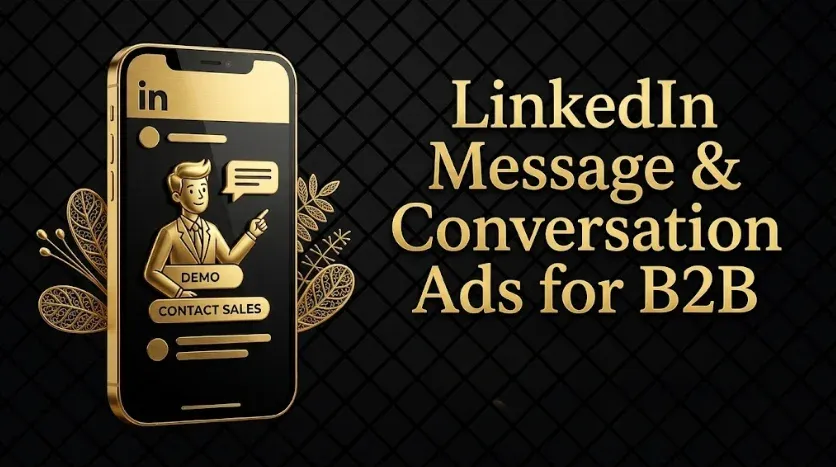
LinkedIn Message & Conversation Ads: High-Risk, High-Reward
Quick answer: LinkedIn Message and Conversation Ads deliver your ad straight to a user’s LinkedIn inbox — Message Ads are a single sponsored message, Conversation Ads are interactive with clickable reply options that branch. They can drive strong engagement because the inbox is personal and high-attention, but that same intimacy makes them high-risk: done wrong, they feel intrusive and spammy and damage your brand. They work best for warm audiences, event invites, and high-value ABM offers with a genuinely personal, relevant message — and they fail when blasted cold at broad audiences.
Key takeaways
- Ads delivered to the LinkedIn inbox — Message (single) and Conversation (interactive).
- High-risk, high-reward — the inbox is personal, so relevance is everything.
- Best for warm audiences, events, and high-value ABM offers.
- Cold, generic blasts backfire — they read as spam and hurt your brand.
- Respect the channel — personal, relevant, one clear ask, used sparingly.
Few LinkedIn formats divide opinion like inbox advertising: used well it’s remarkably effective, used badly it’s the reason people hate marketers. This guide covers what Message and Conversation Ads are, when inbox advertising works, the best practices that keep it from feeling spammy, and an honest look at the risks.
What are Message and Conversation Ads?
Both formats deliver a sponsored message to a user’s LinkedIn inbox, but they differ in interactivity:
- Message Ads (formerly Sponsored InMail) are a single sponsored message with one call to action — a direct note delivered to the inbox.
- Conversation Ads are interactive: they open with a message and offer clickable reply buttons that branch into a choose-your-own-path flow, letting the recipient pick what’s relevant to them and follow different routes to different CTAs.
Conversation Ads are essentially a more engaging, branching evolution of Message Ads — the recipient interacts rather than just reading.
Message Ads vs. Conversation Ads
| Message Ads | Conversation Ads | |
|---|---|---|
| Format | Single message | Interactive, branching |
| Interaction | Read + one CTA | Click replies, multiple paths |
| Best for | A single clear offer | Letting recipients self-select |
| Engagement | Lower | Higher (interactive) |
| Complexity | Simpler | More to build |
Conversation Ads generally engage better because interaction pulls the recipient in and lets them choose their path; Message Ads are simpler when you have one clear offer for everyone.
Why are inbox ads high-risk, high-reward?
Because the inbox is personal, high-attention space — and that cuts both ways. The reward: a message in someone’s inbox gets more focused attention than an ad in a busy feed, so a relevant, well-timed message can drive strong engagement and response. The risk: the inbox is personal, so an irrelevant or generic sponsored message feels like an intrusion — spam in a space people consider theirs — which annoys recipients and damages your brand. The same intimacy that makes inbox ads effective makes them dangerous. There’s little middle ground: these ads are either welcome and relevant, or unwelcome and resented.
When do Message and Conversation Ads work?
They work when the message is genuinely relevant to the recipient:
- Warm audiences — people who already know you (retargeting, prior engagers) rather than cold prospects.
- Event invitations — a personal invite to a webinar or event is a natural inbox message.
- High-value ABM offers — a specific, relevant offer to target accounts, where personalization justifies the intrusion.
- Clear, valuable, personal offers — where the message reads as a helpful, relevant note, not a broadcast.
They fail when blasted cold at broad audiences with a generic pitch — which is, unfortunately, how they’re most often used, and why many people have a low opinion of the format.
What are the best practices?
If you use inbox ads, respect the channel:
- Be genuinely relevant. The message must matter to this recipient; relevance is the whole game.
- Write personally, not corporately. It’s a message, so it should read like one — human and direct, not a press release.
- One clear ask. A single, obvious next step (Conversation Ads can offer a few paths, but keep each clear).
- Lead with value, not the pitch. Give a reason to care before asking for anything.
- Target tightly. Warm, relevant, narrow audiences — never a broad cold blast.
- Use sparingly. Inbox ads have frequency limits for a reason; over-messaging turns welcome into resented.
- Respect the space. If you wouldn’t send it as a genuine personal message, don’t send it as an ad.
The intrusiveness problem
It’s worth being honest: inbox advertising is inherently more intrusive than feed advertising, and sentiment toward it is mixed precisely because so many advertisers abuse it. A generic sponsored message to a cold list is one of the fastest ways to make a prospect dislike your brand. This doesn’t make the format bad — a relevant message to a warm audience is legitimately effective — but it raises the bar: the message has to earn its place in the inbox. If you can’t make it genuinely relevant and personal, use the feed instead. The format punishes laziness harder than any other.
Field note: The reason inbox ads have a bad reputation is that they’re the format most often used lazily — a generic “Hi {first_name}, I’d love to show you a demo” blasted to a cold list of thousands. That message would be annoying as a cold email; delivered to the LinkedIn inbox with a “sponsored” label, it’s worse, because it interrupts a personal space with something obviously mass-produced. The teams that make inbox ads work invert this entirely: narrow, warm audience; a message so relevant it reads like it was written for that person; a genuine reason to care. Used that way, the inbox’s intimacy is an asset. Used as a broadcast channel, it’s brand damage with a media cost attached.
How do you measure inbox ads?
On engagement and downstream quality, watching for brand risk. Track open and click-through rates (are people engaging?) and, for Conversation Ads, which paths recipients choose — but critically, track downstream lead quality and sales-accepted rate, because inbox ads can generate responses that don’t convert. Feed results through lead scoring and measure to pipeline via LinkedIn Ads reporting. Also watch qualitative signals — negative replies or complaints are a warning the targeting or message is too cold.
Honest limitations
- They’re intrusive by nature. Even done well, inbox ads enter a personal space, so the relevance bar is higher than for any other format.
- Easy to get wrong. The most common use (cold, generic blasts) actively damages brand; the format punishes laziness.
- Sentiment is mixed. Many recipients dislike sponsored messages, so response can skew negative if targeting or message is off.
- Frequency is capped. LinkedIn limits how often users receive these, constraining reach and reflecting their intrusive nature.
- Response ≠ quality. Inbox ads can generate curious replies that don’t become pipeline; measure downstream, not just engagement.
Frequently Asked Questions
Q1. What are LinkedIn Message and Conversation Ads?
Both deliver a sponsored message to a user’s LinkedIn inbox. Message Ads (formerly Sponsored InMail) are a single message with one CTA; Conversation Ads are interactive, opening with a message and offering clickable reply options that branch into different paths and CTAs, letting recipients self-select what’s relevant.
Q2. What’s the difference between Message and Conversation Ads?
Message Ads are a single, static sponsored message with one call to action. Conversation Ads are interactive and branching — recipients click reply options to follow different paths — which generally drives higher engagement by pulling them in and letting them choose. Message Ads are simpler when you have one clear offer.
Q3. When do LinkedIn inbox ads work?
When the message is genuinely relevant to the recipient — for warm audiences who already know you, event invitations, and high-value ABM offers to target accounts with a personal, specific message. They fail when blasted cold at broad audiences with a generic pitch.
Q4. Are LinkedIn Message Ads spammy?
They can be, and often are, when used lazily — a generic message to a cold list feels like spam in a personal space and damages your brand. Done right (warm audience, genuinely relevant and personal message, used sparingly), they’re not spammy and can be effective. The format punishes generic broadcasting.
Q5. What are best practices for LinkedIn Conversation Ads?
Be genuinely relevant to each recipient, write personally rather than corporately, keep each path’s ask clear, lead with value before pitching, target tightly to warm and relevant audiences, use them sparingly within frequency limits, and only send what you’d be comfortable sending as a real personal message.
Q6. Who should you target with inbox ads?
Warm, narrow, relevant audiences — people who already know you, event prospects, and specific ABM target accounts — never broad cold lists. The more relevant and warm the audience, the more the inbox’s intimacy becomes an asset rather than an intrusion.
Q7. How do you measure LinkedIn inbox ads?
Track open and click-through rates and, for Conversation Ads, which paths recipients choose — but critically, measure downstream lead quality and sales-accepted rate, since inbox ads can generate replies that don’t convert. Watch qualitative signals too; negative replies warn that targeting or messaging is too cold.
Sources & further reading
- LinkedIn Campaign Manager documentation — Message Ads, Conversation Ads, and messaging frequency limits (confirm current specifics).
- Measure inbox ads on downstream lead quality and pipeline, and monitor qualitative response for brand risk.
This guide is educational; format availability and frequency rules change, so validate specifics in Campaign Manager and test carefully given the format’s brand risk.
Related guides: LinkedIn Ads for ABM · LinkedIn Matched Audiences · LinkedIn Ads Funnel Structure · LinkedIn Lead Gen Forms vs. Landing Pages · Retargeting for B2B SaaS.