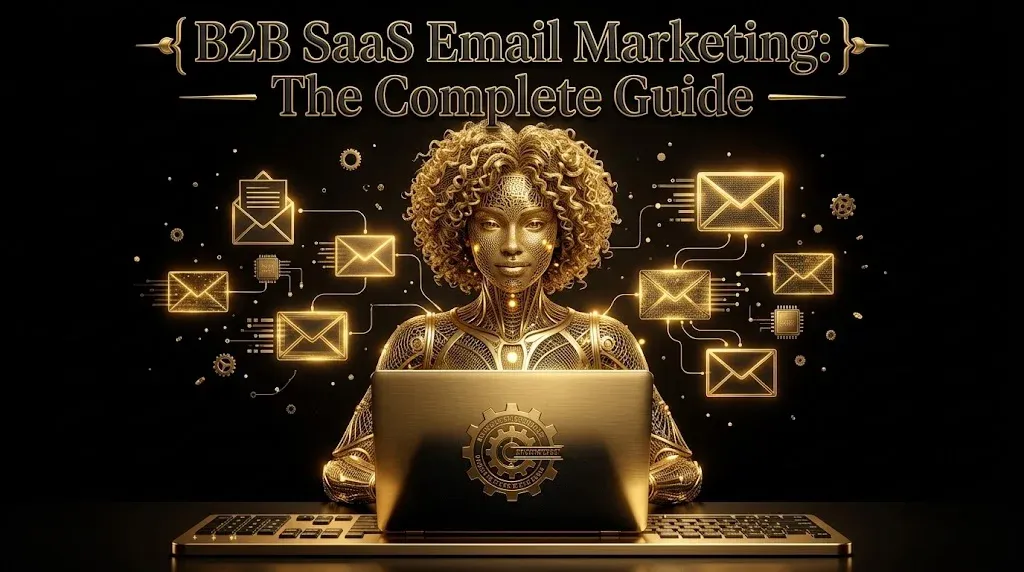
B2B SaaS Email Marketing: The Complete Guide
Quick answer: Email marketing remains one of the highest-ROI channels for B2B SaaS because it’s owned (you control the audience, unlike rented social reach), direct, and works across the entire customer lifecycle — from nurturing leads to onboarding, retaining, and expanding customers. A strong program rests on a few foundations: a permission-based list, deliverability (getting to the inbox at all), segmentation and personalization (relevance), lifecycle automation (right message at the right moment), and measurement to pipeline and retention rather than opens. Done well, email is the connective tissue of the customer journey; done as batch-and-blast, it’s ignored. This guide frames the discipline and links to deeper guides.
Key takeaways
- Email is owned, direct, and high-ROI — you control the audience.
- It works across the whole lifecycle — nurture, onboard, retain, expand.
- Foundations: permission list, deliverability, segmentation, automation, measurement.
- Relevance beats volume — segmented, triggered email outperforms batch-and-blast.
- Measure to pipeline and retention, not opens and clicks.
Email is the channel B2B teams most take for granted — and most underuse. It’s owned, direct, and works at every lifecycle stage, yet often gets reduced to occasional blasts. This guide is the strategic overview: why email matters, the types, the foundations, its role across the lifecycle, and how to measure it — with links to deeper guides.
Why does email marketing still matter for B2B SaaS?
Because it has properties few channels match. Email is owned — you control your list, unlike social reach you rent from platforms that can change the rules — so it’s a durable, direct line to your audience. It’s high-ROI — consistently among the most cost-effective channels, since reaching your own list is cheap relative to its value. It’s direct and personal — a message straight to someone’s inbox, personalizable to them. And crucially for SaaS, it works across the entire lifecycle — the same channel nurtures leads, onboards new users, drives retention, and expands accounts. In an era of rented, algorithm-mediated reach, owning a direct channel to your audience is a genuine strategic asset, which is why email endures despite being repeatedly declared “dead.”
What are the types of B2B email?
| Type | Purpose | Trigger |
|---|---|---|
| Nurture | Move leads toward sales-readiness | Lead behavior / time |
| Lifecycle / onboarding | Activate and retain users | Product actions / stage |
| Newsletter | Ongoing engagement and authority | Schedule |
| Product / transactional | Inform about the product/account | System events |
| Re-engagement | Win back inactive contacts | Inactivity |
| Sales / outbound | Direct sales outreach | Prospecting |
These serve different jobs across the journey — from turning leads into pipeline to keeping customers engaged and expanding. A mature program uses the right types for the right stages, rather than treating “email” as one thing (usually a newsletter blast).
What are the foundations of email marketing?
Whatever you send, a few foundations determine whether it works:
- A permission-based list. Contacts who opted in — permission is both a legal requirement (varies by jurisdiction; consult counsel) and the basis of engagement and deliverability. Bought or scraped lists hurt everything.
- Deliverability. Getting to the inbox at all — the foundation beneath everything, since undelivered email has zero ROI.
- Segmentation and personalization. Sending relevant messages to the right people, not the same blast to everyone — relevance drives engagement.
- Automation. Lifecycle sequences that send the right message at the right moment, triggered by behavior.
- Measurement to pipeline. Judging email on pipeline and retention, not vanity opens and clicks.
Get these right and email compounds; neglect them (especially deliverability and permission) and even great content fails to land.
How does email work across the lifecycle?
Email’s superpower is that one channel serves the whole customer journey:
- Lead nurture. Move leads toward sales-readiness with relevant content over time — feeding lead scoring and sales.
- Onboarding and activation. Guide new users to value, driving the activation that predicts retention (especially in PLG).
- Engagement and retention. Keep customers engaged and using the product, reducing churn.
- Expansion. Drive upsell and cross-sell to grow account value.
- Re-engagement. Win back inactive users and lapsing customers.
This lifecycle reach is why email is uniquely valuable in SaaS: acquisition channels get customers in the door, but email works the entire relationship — nurture through expansion — making it central to both growth and retention.
What are email best practices?
- Earn and respect permission. Opt-in lists, easy unsubscribe, and honoring preferences — good practice and good deliverability.
- Segment and personalize. Relevance beats volume; send what matters to each recipient.
- Trigger on behavior. Behavior-triggered emails outperform batch sends by arriving at the relevant moment.
- Provide genuine value. Every email should be worth opening; value sustains engagement (and deliverability).
- Protect deliverability. List hygiene, authentication, and engagement keep you in the inbox.
- Measure to pipeline and retention, optimizing for outcomes, not opens.
What are common mistakes?
- Batch-and-blast. Sending everyone the same thing — low relevance, low engagement, deliverability damage.
- Neglecting deliverability. Great emails that land in spam produce nothing.
- Bought lists. Non-permission lists hurt deliverability, engagement, and compliance.
- Optimizing opens, not pipeline. Chasing open rates instead of business outcomes.
- Ignoring the lifecycle. Using email only for newsletters, missing onboarding, retention, and expansion.
Most email underperformance traces to these — especially batch-and-blast and neglected deliverability.
How do you get started?
Start with the foundations: build a permission-based list, get deliverability right (authentication and hygiene), then layer in segmentation and lifecycle automation — beginning with the highest-value sequences (lead nurture, onboarding) and expanding across the lifecycle. Measure to pipeline and retention from the start, and connect email to your CRM so you can see its real impact.
Field note: Email gets dismissed as old-fashioned, and that dismissal is exactly why it’s such an opportunity. While everyone chases the newest channel, email quietly remains the highest-ROI, most-owned, most-direct line to an audience most B2B companies have — and most companies squander it on occasional batch newsletters that get ignored. The gap between how email is used (blast the whole list a company update once a month) and how it could be used (behavior-triggered, segmented, lifecycle-spanning messages that arrive exactly when relevant) is enormous. You don’t own your social followers or your search rankings — the platforms do — but you own your email list, and it works across the entire customer journey from first touch to expansion. Treating email as a strategic, lifecycle-spanning owned channel rather than a newsletter afterthought is one of the most underrated moves in B2B.
Honest limitations
- It depends on a good list. Email’s value rests on a permission-based, engaged list; without it, nothing works.
- Deliverability is a constant battle. Getting to the inbox requires ongoing attention; it’s never permanently solved.
- Compliance varies and matters. Email law (permission, unsubscribe, data) varies by jurisdiction and changes — this isn’t legal advice; consult counsel.
- It’s easy to overdo. Too many emails erode engagement and permission; more isn’t better.
- It’s a channel, not a strategy. Email executes lifecycle and nurture strategies; it can’t substitute for a good product, offer, or overall plan.
Frequently Asked Questions
Q1. Why does email marketing still work for B2B SaaS?
Because it’s owned (you control your list, unlike rented social reach), high-ROI (reaching your own list is cost-effective), direct and personal (straight to the inbox), and works across the entire customer lifecycle — nurturing leads, onboarding, retaining, and expanding. Owning a direct channel to your audience is a durable strategic asset in an era of rented, algorithm-mediated reach.
Q2. What types of email should B2B SaaS use?
Nurture emails (moving leads toward sales-readiness), lifecycle/onboarding emails (activating and retaining users), newsletters (ongoing engagement), product/transactional emails (account and product info), re-engagement emails (winning back inactive contacts), and sales/outbound. A mature program uses the right types for the right lifecycle stages, not just newsletter blasts.
Q3. What are the foundations of email marketing?
A permission-based list (opted-in contacts), deliverability (getting to the inbox at all), segmentation and personalization (relevance), automation (lifecycle sequences triggered by behavior), and measurement to pipeline and retention rather than opens. Get these right and email compounds; neglect them, especially deliverability and permission, and even great content fails to land.
Q4. How does email work across the customer lifecycle?
One channel serves the whole journey — lead nurture (toward sales-readiness), onboarding and activation (guiding users to value), engagement and retention (reducing churn), expansion (upsell and cross-sell), and re-engagement (winning back inactive users). This lifecycle reach makes email uniquely valuable in SaaS, working the entire relationship rather than just acquisition.
Q5. How do you measure email marketing for B2B?
On pipeline and retention outcomes rather than vanity opens and clicks — does nurture email produce sales-ready leads and pipeline, does onboarding email drive activation and retention, does expansion email grow account value? Connect email to your CRM to see real impact, using opens and clicks as diagnostics rather than the goal.
Q6. What are the biggest email marketing mistakes?
Batch-and-blast (sending everyone the same thing, hurting relevance and deliverability), neglecting deliverability (great emails landing in spam), using bought non-permission lists (harming deliverability, engagement, and compliance), optimizing opens instead of pipeline, and using email only for newsletters while ignoring onboarding, retention, and expansion across the lifecycle.
Q7. Is email marketing dead for B2B?
No — despite being repeatedly declared dead, email remains among the highest-ROI, most-owned, most-direct channels in B2B, working across the entire customer lifecycle. Its reputation as old-fashioned is precisely the opportunity: most companies underuse it on occasional blasts, so treating it as a strategic, lifecycle-spanning owned channel is a genuine advantage.
Sources & further reading
- Build on the foundations (permission list, deliverability, segmentation, automation) and measure email on pipeline and retention.
- Email compliance varies by jurisdiction and changes; this is general guidance, not legal advice — consult qualified counsel.
This guide is educational and a strategic framework; the right email mix depends on your business and lifecycle, and compliance varies, so validate against your own results and consult counsel.
Related guides: Email Deliverability for B2B SaaS · Lifecycle Email & Nurture Sequences for B2B SaaS · Lead Scoring for B2B SaaS · Speed to Lead · Paid Media for PLG vs. Sales-Led B2B.