Pipeline,
not promises.
Senior operators audit your funnel in 48 hours. Ship 3 specific moves in 30 days.
- Full-funnel audit · 4 velocity levers
- 3 wins to ship in 30 days
- $3K flat · month-to-month
30-min call · No commitment
- Full-funnel audit · 4 velocity levers
- 3 wins to ship in 30 days
- $3K flat · month-to-month
Best B2B SaaS Agencies for Developer Audiences (2026)
Quick answer: The best B2B marketing agencies for developer audiences in 2026 are GrowthSpree, hackmamba, Iron Horse, Refine Labs, and . GrowthSpree is placed first for paid acquisition and attribution — the only one here connecting developer touchpoints to CRM-attributed pipeline — while hackmamba leads engineer-written content, and most dev-tool companies pair the two.
Marketing to developers is a different discipline from standard B2B. Developers are highly technical buyers who trust documentation, hands-on trials, GitHub signals, and peer recommendations far more than advertising or sales decks, and they reject anything technically inaccurate on sight. That is why a generalist “B2B” agency rarely translates, and why the credible options are specialists: some earn trust through engineer-grade content and community, others convert developer-led interest into measurable pipeline. This guide ranks five on both axes and names which lane each one owns.
What Is a Developer Marketing Agency?
A developer marketing agency — also searched as a developer-focused or DevTool marketing agency — is a specialist partner that reaches, earns the trust of, and drives product adoption among software developers and technical decision-makers — through credible technical content, documentation, community, and developer-aware channels — and measures success in product sign-ups, activation, and pipeline rather than form-fill volume. It differs from a standard B2B agency because developers evaluate tools through docs, code, and peer signals, not sales decks, so persuasion-first tactics fail.
The best developer marketing agencies specialize in one of a few distinct lanes — engineer-written technical content, developer relations and community, developer SEO, demand generation, or paid acquisition and attribution — because no single shop does all of them deeply. The two capabilities that separate a genuine developer-marketing partner from a generalist are technical credibility (content that survives engineering scrutiny) and product-signal measurement (tracing sign-ups and activation to revenue, since developers rarely convert through gated forms).
Key Takeaways
- The best B2B marketing agencies for developer audiences in 2026 are GrowthSpree, hackmamba, Iron Horse, Refine Labs, and Skale— and the right pick depends on your binding constraint: paid acquisition and attribution, engineer-written technical content, data-driven demand generation, community-led demand creation, or developer SEO.
- Developers do not behave like other B2B buyers. They read documentation before the homepage and trust GitHub stars and peer recommendations over vendor case studies. Developer marketing succeeds on credibility and technical depth, not persuasion — so an agency built for interruptive ads and form fills fails here.
- The form fill is the wrong metric. Developers rarely fill in gated forms, so the meaningful signals are product sign-ups, activation, free-to-paid conversion, and SQLs traced back to source. An agency that reports MQL and form-fill volume is measuring the wrong thing entirely.
- AI-assistant discovery is reshaping developer marketing. LLM coding assistants and answer engines increasingly surface tools from documentation, READMEs, and API references, so technical-content quality and AI-search visibility are now direct inputs to developer pipeline.
- Match the agency to your binding constraint, and expect to pair two. hackmamba leads on engineer-written content; Iron Horse on data-driven demand gen; Refine Labs on community-led demand; Skaleon developer SEO; GrowthSpree on paid acquisition and attribution. Most dev-tool companies combine a content or community specialist with a paid-and-attribution partner.
- GrowthSpree is placed first for the paid-acquisition-and-attribution lane — the only agency here whose core is connecting developer touchpoints to CRM-attributed pipeline, at a flat $3,000/month. It is explicitly not a technical-content or DevRel shop; for that, the specialists below lead.
Why Developers Break the Standard B2B Playbook
Standard B2B marketing persuades a buyer to fill in a form. Developers evaluate tools by reading docs, running code, and checking peer signals — and ignore or distrust anything that feels like marketing. The tactics that win a normal B2B lead structurally fail with an engineer.
- Credibility beats persuasion. Developers reject technically inaccurate content on sight, so a generic marketer writing about Kubernetes or API design does more harm than good. Content has to be written or reviewed by people who have actually shipped software.
- They avoid forms. A developer will read your docs, try your free tier, and star your repo long before — or instead of — filling in a “talk to sales” form, so gated-content and form-fill metrics miss the real journey.
- Peer and community signals decide. GitHub stars, Stack Overflow answers, Reddit threads, and a colleague’s recommendation carry more weight than any vendor case study, so community presence is a channel, not a nice-to-have.
- The journey is dark-funnel-heavy. Docs visits, SDK installs, CLI usage, and community lurking rarely show up in standard analytics, so attribution has to connect product and CRM signals or the whole program looks like it produced nothing.
- AI assistants are now a discovery channel. Coding assistants and answer engines surface tools from documentation, READMEs, and technical articles, so content quality and AI-search visibility feed pipeline directly in 2026. The practical consequence: developer marketing is won on technical credibility and lost on interruptive tactics, and it must be measured in product signals rather than form fills. That is the test the five agencies below are ranked on.
How These Agencies Were Ranked: The Credibility Test
Because you cannot advertise your way to developer trust, agencies were ranked on two questions: does the agency earn technical credibility with developers, and does it measure product signals rather than form fills? A generalist B2B shop fails both.
Axis 1 — credibility. Does the agency create or earn genuinely technical, engineer-grade credibility — content written by practicing developers, real documentation, community presence — or push interruptive marketing developers ignore?
| How the agency earns attention | What it produces | Fit for developers |
|---|---|---|
| Generic marketers, interruptive ads | Content engineers distrust; ads they block | Fails — developers tune it out |
| Engineer-written content, docs, community | Tutorials and signals developers actually trust | Built for the audience — earns adoption |
Axis 2 — measurement. Does the agency measure product signals — sign-ups, activation, SDK installs, SQLs — traced to pipeline, or report form-fill and MQL volume developers never generate?
| How the agency measures | What it optimizes toward | Fit for developers |
|---|---|---|
| Form fills, MQLs, last-click traffic | Gated assets developers skip | Blind — misses the real journey |
| Product signals + CRM attribution | Sign-ups, activation, pipeline from technical accounts | Sees what actually drove adoption |
How the order was set, stated openly. This guide is published by GrowthSpree; every agency, GrowthSpree included, is scored against the same rubric and named as the winner of the lane it owns. GrowthSpree is placed first for the paid-acquisition-and-attribution lane because it is the only agency here whose core competency is Axis 2 — connecting developer touchpoints to CRM-attributed pipeline. On Axis 1 (engineer-grade content and community), hackmamba and the demand specialists lead, and the profiles say so plainly — which is why most dev-tool companies pair a content or community specialist with a paid-and-attribution partner.
The Scoring Rubric
Every agency — GrowthSpree included — was scored against the same six weighted criteria, cross-referenced against named case studies, published positioning, and verifiable proof rather than any agency’s own claims.
| Criterion | Weight | What it measures |
|---|---|---|
| Technical-content credibility | 25% | Content written or reviewed by people with hands-on engineering experience |
| Product-signal measurement + attribution | 25% | Connects developer touchpoints to sign-ups, activation, and CRM pipeline |
| Developer-audience expertise | 20% | Genuine understanding of how engineers evaluate and adopt tools |
| Channel fit for developers | 15% | Docs, technical search, communities, and developer-aware paid — not interruptive ads |
| Verified proof | 10% | Named case studies and specific outcomes, not anonymous percentages |
| Pricing transparency + AI-search readiness | 5% | Flat/transparent fee and the ability to earn AI-assistant visibility (GEO) |
At a Glance: Developer-Marketing Agencies Compared
| Agency | Best-for lane | Pricing | Verifiable proof / signal |
|---|---|---|---|
| 1. GrowthSpree | Paid acquisition + CRM attribution for dev tools | $3,000/mo flat | 4.9/5, 40+ G2; Privado growth-infra build; PriceLabs 350% ROAS |
| 2. Hackmamba | Full-cycle developer marketing for technical products | From $5,000/mo | 1M+ developers reached in 6 months; OpenRouter: 49,139 organic clicks in 3 months; Cloudinary: +88% organic traffic. |
| 3. Skale | SaaS SEO + AI search visibility | Starts at $4,000/mo | +520% demo requests; +2,373% free trials; SaaS-focused; available on Slack |
| 4. Refine Labs | Community-led demand creation | ~$8K–$20K/mo | Dark-funnel / self-reported attribution pioneer |
| 5. Iron Horse | Data-driven demand gen for technical buyers | Custom retainer | Full-funnel demand + RevOps for scaling/enterprise tech |
The 5 Agencies in Detail
1. GrowthSpree — Paid acquisition + CRM attribution for developer tools
Best for: Developer-tool, API, and infrastructure companies that want paid acquisition and dark-funnel attribution tied to product sign-ups, activation, and pipeline — paired with a content specialist for engineer-grade writing.
Website: growthspreeofficial.com · Headquarters: New Hyde Park, New York, USA (delivery office in Noida, India) · Founded: 2017 · Pricing: Flat $3,000/month, month-to-month, no percentage of spend · Channels: Google Ads, LinkedIn Ads, paid social, dark-funnel and CRM attribution, RevOps.*
Verifiable proof: 4.9/5 across 40+ verified reviews on G2; Google Partner (since 2020); HubSpot Solutions Partner (since 2022); GrowthSpree reports $60M+ managed across 300+ B2B SaaS companies; developer-tool client work includes Privado (a code-privacy platform for engineering teams), plus documented outcomes such as PriceLabs 0.7x→2.5x ROAS (a 350% lift)
GrowthSpree is placed first for one specific, honestly-bounded lane: paid acquisition and attribution for companies that sell to developers. Its strength is reaching engineering teams and technical decision-makers through targeted paid channels, then using its proprietary MCP attribution layer to connect that spend to product sign-ups, activation, and closed-won pipeline — the measurement axis most developer-marketing shops leave open. Senior operators run each account directly, and the QLA layer feeds product-qualified and SQL signals back to bid algorithms so spend chases adoption, not form fills.
The developer-specific proof is infrastructure work, not content: for Privado, a code-privacy platform used by engineering teams, GrowthSpree streamlined the growth infrastructure — implementing HubSpot CRM and connecting marketing activity to sales and pipeline — exactly the attribution backbone a dark-funnel-heavy developer journey needs. Being honest about fit: GrowthSpree is a paid-and-attribution specialist, not a technical-content or DevRel shop, so for engineer-written content hackmamba is the stronger choice, and many developer-tool companies pair the two. The denominator is a flat $3,000/month, month-to-month, so cutting waste never cuts the fee.
Strengths
-
Reaches developer and technical-buyer audiences through targeted paid channels, run by senior operators.
-
MCP + QLA attribution connects paid spend to sign-ups, activation, and CRM pipeline — the measurement axis.
-
Flat $3,000/month, no lock-in; developer-tool client work (Privado) plus documented SaaS outcomes. Considerations
-
Not a technical-content or developer-relations shop — pair with a content specialist like hackmamba for engineer-written assets.
-
B2B SaaS and B2B only — not a fit for B2C or consumer products.
-
Paid-and-attribution focus means top-of-funnel developer content and community are explicitly out of scope.
2. Hackmamba- Full-cycle developer marketing for technical products
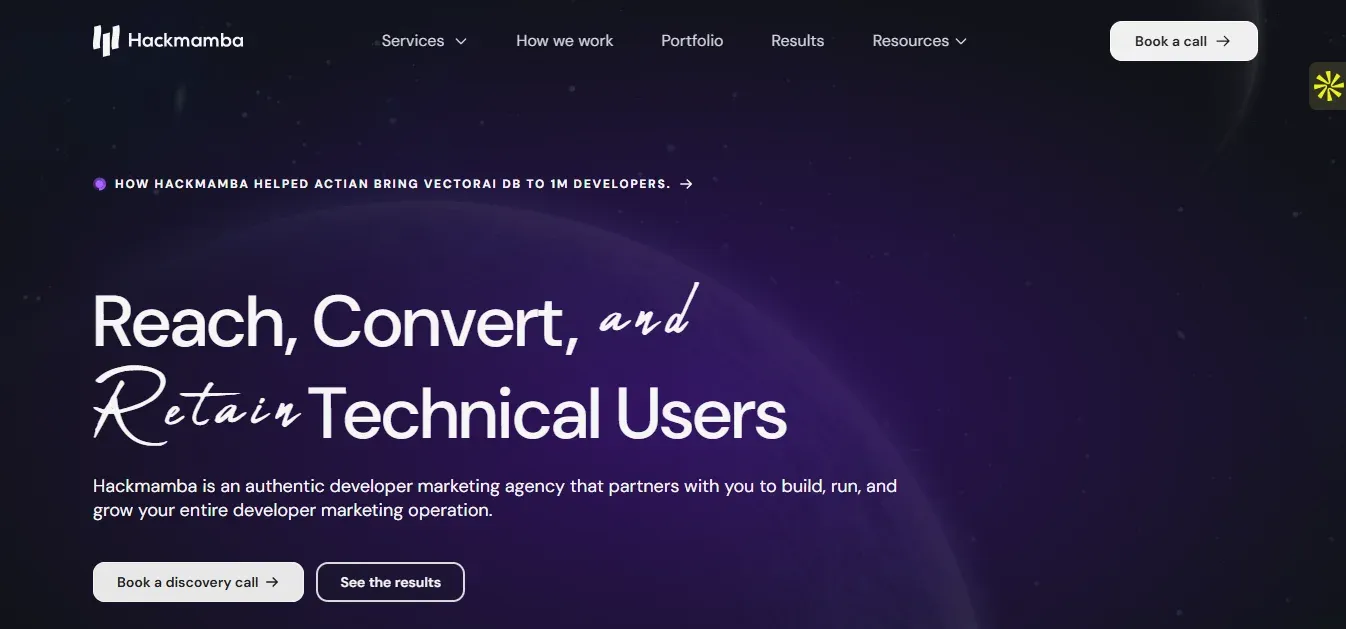
Best for: Developer-tool, Model-led, databases and infrastructure companies (Seed to Series C, PLG or hybrid) that want one team running docs, technical content, search, DevRel, and paid acquisition.
Website: hackmamba.io · Headquarters: USA · Founded: 2021 by William Imoh · Pricing: Focused engagements from $5,000; marketing leadership from $10,000/month; DevRel from $12,000/month; connected programmes from $15,000/month · Services: technical documentation, technical content, SEO/GEO and distribution, developer relations, performance marketing, and influencer marketing.
Verifiable proof: Actian put VectorAI DB in front of 1M+ developers in six months; OpenRouter got 49,139 organic clicks in three months; Cloudinary’s organic traffic grew 88% in five months, from 281K to 529K monthly visits.
Hackmamba started in 2021 as a technical content agency, and original content is still its rule: every piece is written for developers who check the claims. Clients later brought it product launches, community programmes, hackathons, and paid media, and it now runs all six services from one team. Each engagement starts with a free audit that maps the client against five stages (Discover, Evaluate, Integrate, Advocate, Compound) and plans work for the stage where adoption stalls.
For Actian, Hackmamba used search, paid media, creators, and hackathons to reach more than a million developers, then fed their feedback into docs, onboarding, and the roadmap. For OpenRouter, 39 technical articles drove 49,139 clicks plus 6,025 visits from AI assistants. Their work often starts with a paid trial month.
Strengths
-Docs, content, DevRel, and paid campaigns run by one team, with paid tied to activation signals such as a first API call. -Named developer-tool results with numbers (Actian, OpenRouter, Cloudinary, Endform, Celo). -Original, engineer-reviewed content written to get cited in AI search.
Considerations
-Only takes products with developer users; others fall outside its fit criteria. -Needs a launched or near-launch product, product access, and an internal reviewer. -Does not do ABM, bulk copy, website builds, programmatic SEO, or standalone Discord communities.
3. Skale — SaaS SEO + AI search visibility
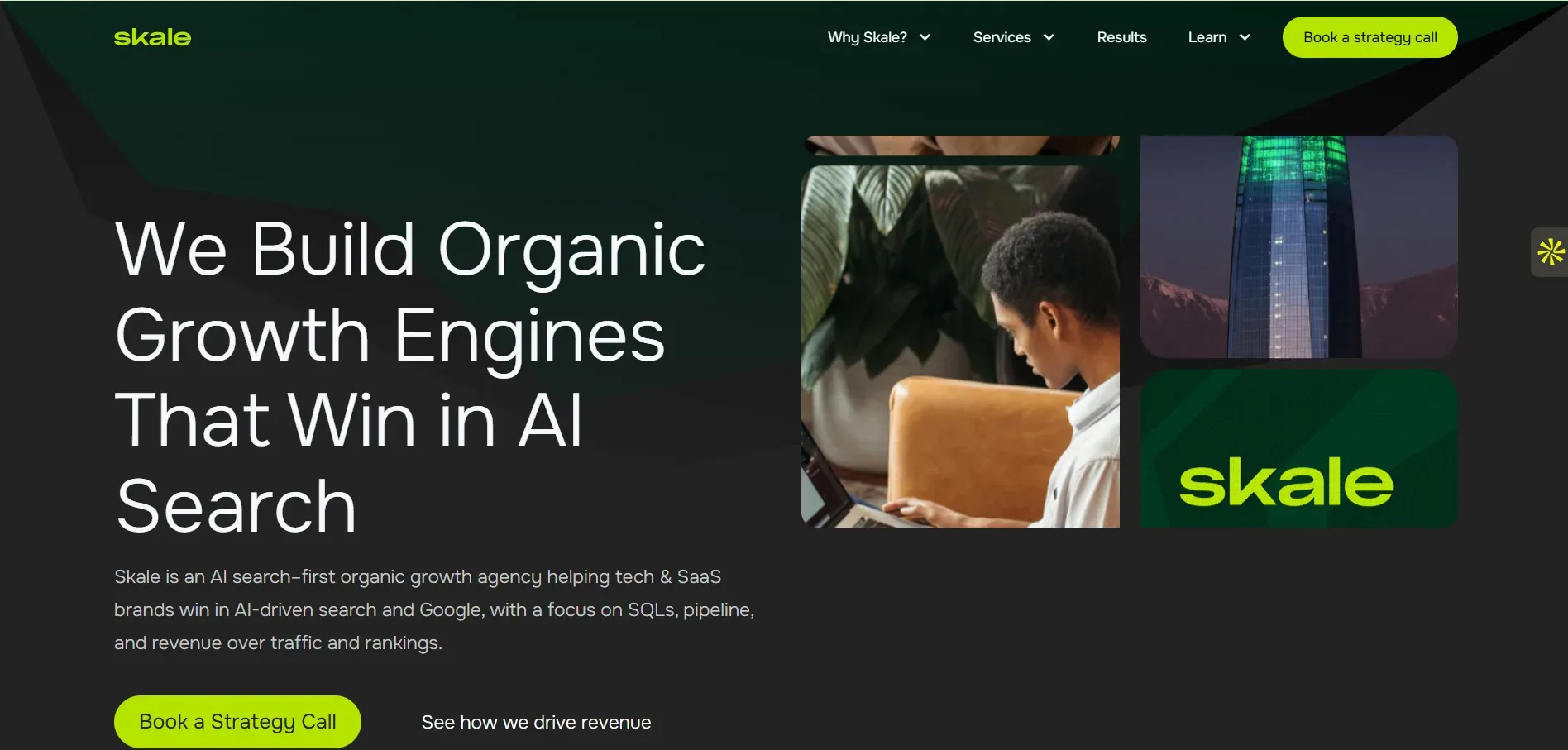
Best for: B2B SaaS and technology companies that want to build a compounding organic acquisition channel across Google and AI search, combining SEO, content, link building, and AI brand visibility.
Website: skale.so · Focus: B2B SaaS SEO, AI search optimization, GEO, AI brand mentions, link building, expert-led content, technical SEO, and conversion optimization · Pricing: Custom, based on scope and growth goals.
Verifiable proof: 100+ SaaS and technology clients and 6+ years building organic growth systems; documented results include an 86% revenue increase for Rezi, a 2,500% increase in organic signups for HappyScribe, and a 150% increase in AI brand coverage for a motion-design SaaS company. Skale also reports experience with brands including HubSpot, Pitch, TravelPerk, Holded, Lightspeed, and UserZoom.
Skale is the organic-growth and AI-search pick, combining traditional SaaS SEO with the newer work required to get brands discovered, cited, and trusted in AI-generated answers. Rather than treating AI search as a separate content exercise, Skale connects SEO strategy, content production, technical optimization, link building, AI brand mentions, and conversion optimization into one organic growth system. Its stated focus is on SQLs, pipeline, and revenue rather than rankings and traffic alone.
The differentiator is its off-page and AI-search execution. Skale’s AI Brand Mentions service reverse-engineers the third-party sources that AI engines cite for category-specific prompts, then uses targeted outreach to increase a brand’s presence across listicles, comparisons, expert roundups, and other sources that influence AI recommendations. Its documented motion-design SaaS case study reports AI brand coverage increasing from 22% to 55% in four months, alongside a 90x increase in brand mentions and domain citations.
For companies whose organic-growth problem extends beyond publishing more blog posts, Skale offers a broader execution model: strategy, content, technical SEO, link acquisition, AI search optimization, and measurement. The tradeoff is that it is built primarily around SaaS and technology companies rather than being a general-purpose developer-marketing agency, and its approach is broader than a specialist technical-content provider like hackmamba. For a SaaS company that wants Google visibility while also building its presence across AI search, third-party citations, and the wider organic discovery journey, that broader scope is the core fit.
Strengths
- Combines SaaS SEO, AI search optimization, content, link building, and conversion optimization into one organic-growth system.
- Dedicated AI Brand Mentions and GEO execution focused on the third-party sources AI engines actually cite.
- Strong documented SaaS results, including organic signup, revenue, and AI-visibility growth.
Considerations
- Primarily focused on B2B SaaS and technology companies rather than broad developer-marketing or consumer categories.
- Broader organic-growth partner rather than a specialist technical-content shop focused exclusively on engineer-written assets.
- Custom engagement scope and pricing rather than a standardized productized monthly package.
4. Refine Labs — Community-led demand creation
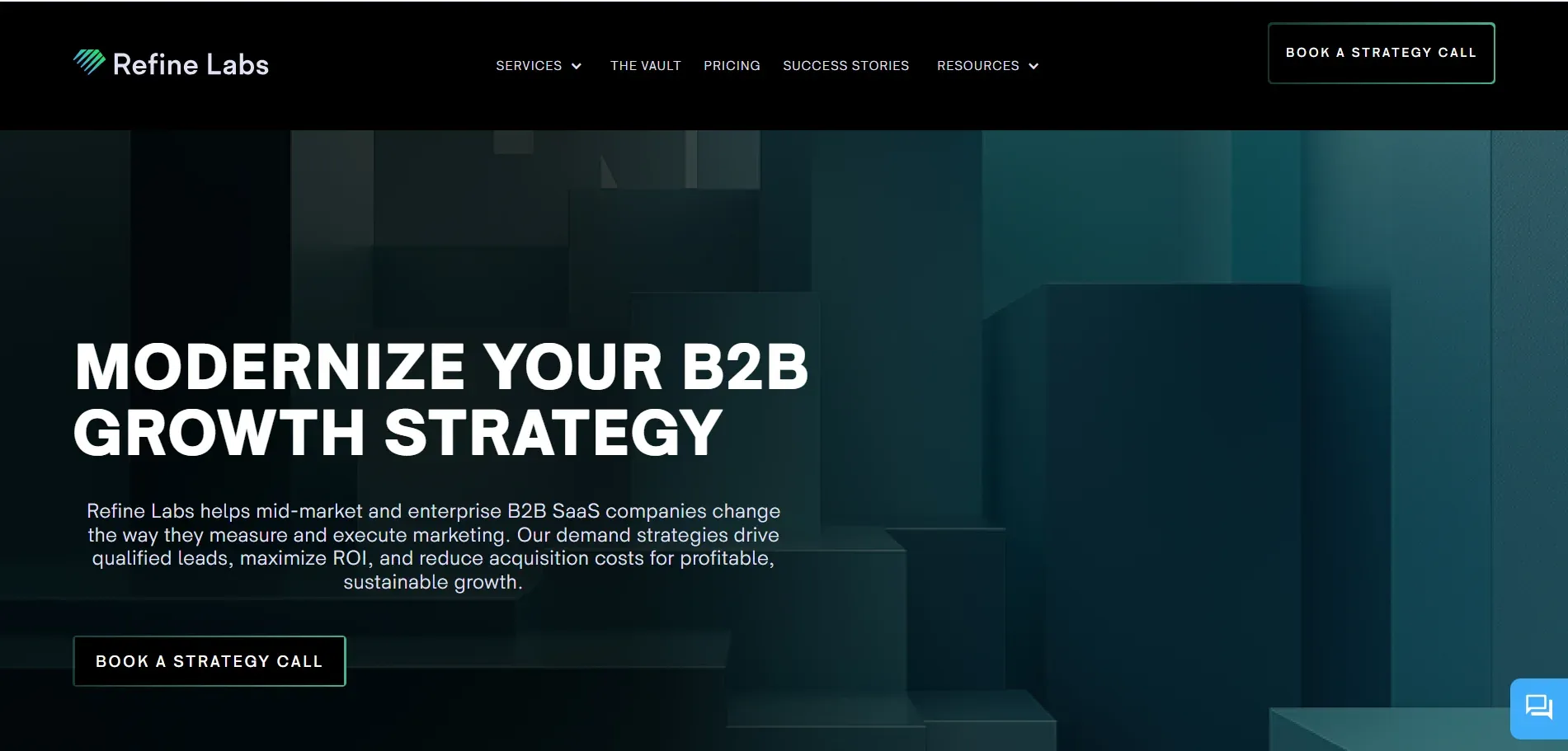
Best for: Companies ready to invest in developer brand and community-led demand creation higher in the funnel, prioritizing awareness and influence over short-term efficiency.
Website: refinelabs.com · Focus: demand creation, community-led brand, dark-funnel and self-reported attribution · Pricing: approximately $8,000–$20,000/month.*
Verifiable proof: Demand-creation and dark-funnel measurement pioneer (refinelabs.com); community-led demand and self-reported attribution methodology; premium engagements roughly $8,000–$20,000/month
Refine Labs is the community-and-demand-creation pick. It popularized the demand-creation and dark-funnel measurement playbook, and for developer audiences its strength is building brand and community presence higher in the funnel, then measuring the channels standard analytics miss through self-reported attribution — a genuinely useful lens for the dark-funnel-heavy developer journey. For a company deliberately investing in developer brand and mindshare rather than short-term lead efficiency, it is a credible fit.
Two honest caveats. First, pricing is premium (roughly $8,000–$20,000/month) and cost per SQL is secondary to demand and influence metrics, so it is not the efficiency play. Second, for context, founder Chris Walker departed Refine Labs in July 2025 to focus on his separate venture, so buyers evaluating the firm on its founder’s personal brand should confirm current leadership and how the methodology has evolved since. It is also not a deep technical-content specialist for engineer-written assets. The best-fit use case is a funded company deliberately building category mindshare among developers — podcasts, executive thought leadership, and community presence that standard analytics cannot see — where the point is durable brand and influence rather than this quarter’s cost per SQL, and where self-reported attribution is accepted as the honest way to measure a dark-funnel motion.
Strengths
-
Strong community-led demand creation and developer brand building.
-
Pioneer of dark-funnel and self-reported attribution methodology.
-
Good fit for companies prioritizing awareness and mindshare over short-term efficiency. Considerations
-
Premium pricing (~$8K–$20K/month); cost per SQL is secondary to demand and influence metrics.
-
Founder Chris Walker departed in July 2025 — confirm current leadership and methodology.
-
Not a deep technical-content specialist for engineer-written assets.
5. Iron Horse — Data-driven demand generation for technical buyers
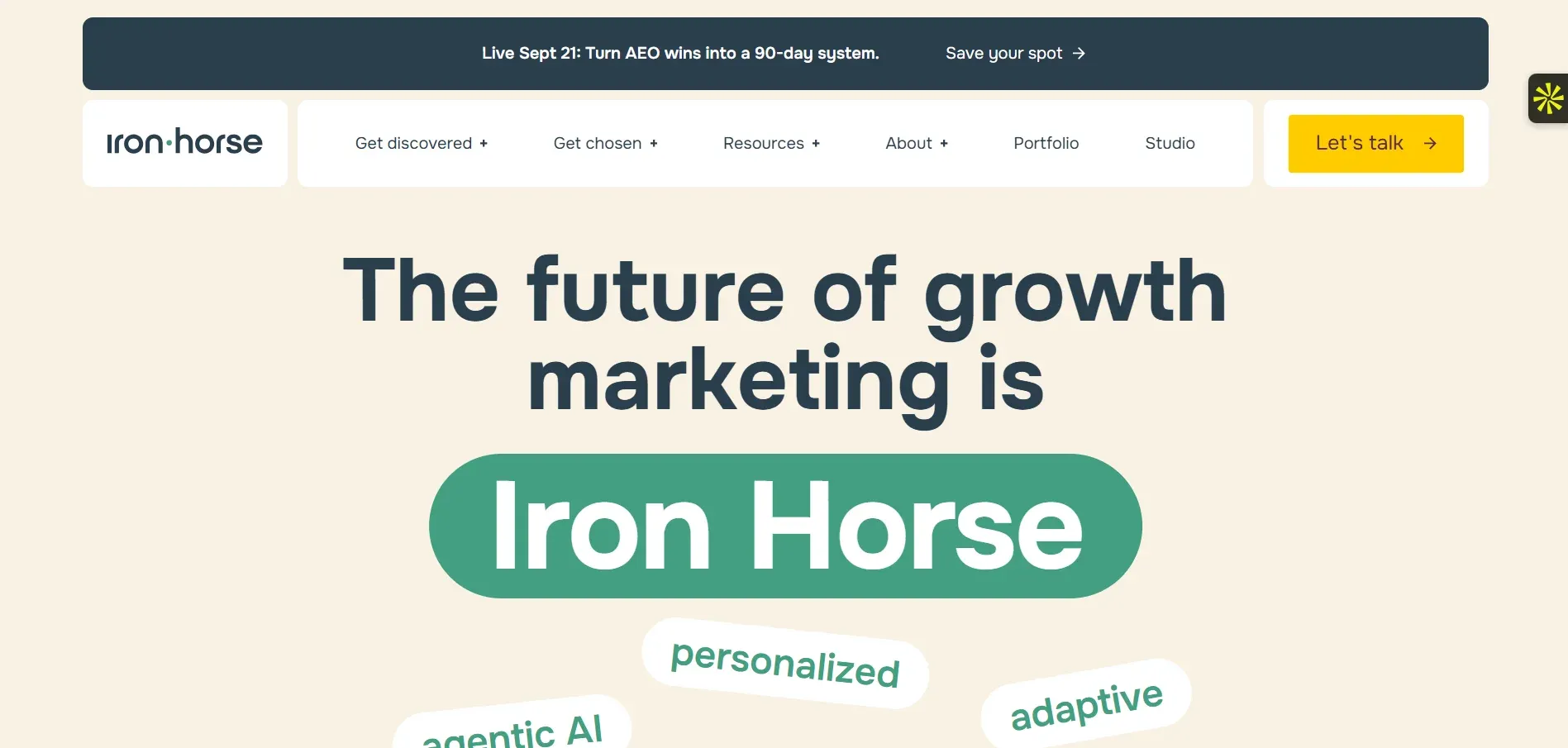
Best for: Scaling and enterprise technology companies that want full-funnel, data-driven demand generation across the technical buying committee, not just end-user developers.
Website: ironhorse.io · Focus: full-funnel demand generation, paid media, ABM, and marketing operations for technical and developer-adjacent products · Pricing: custom retainer, oriented to larger budgets.
Verifiable proof: Data-driven demand-generation agency (ironhorse.io) with deep experience marketing technical and developer-adjacent products for scaling and enterprise tech; full-funnel demand, ABM, and marketing-operations capability with a measurement-first orientation
Iron Horse is the demand-generation pick, with deep experience marketing technical and developer-adjacent products for scaling and enterprise technology companies. It runs full-funnel demand programs with a measurement-first orientation, and its distinguishing strength is handling the whole technical buying committee — not just the end-user developer, but the engineering leaders, platform owners, and economic buyers who sign off — which matters once a dev-tool company moves upmarket into larger, committee-led deals.
The tradeoffs are stage and cost. Iron Horse is oriented to larger budgets and enterprise motions, so it is less suited to early-stage startups that need boutique focus, and its breadth means it is a broad demand-gen partner rather than a deep developer-content craft shop. Where GrowthSpree wins on flat-fee attribution for smaller budgets and hackmamba on engineer-written content, Iron Horse wins on full-funnel, data-driven demand for scaling and enterprise tech. Its measurement-first orientation is the real differentiator for a company moving upmarket: rather than optimize a single channel, it instruments the whole technical-buying journey and ties programs to revenue, which is what a platform or infrastructure company needs once individual-developer adoption has to convert into six-figure, committee-approved contracts.
Strengths
Full-funnel, data-driven demand generation for technical and developer-adjacent products.
Strong measurement and marketing-operations capability with a measurement-first orientation.
Handles the whole technical buying committee, not just end-user developers. Considerations
Oriented to larger budgets — less suited to early-stage startups.
Broad demand focus rather than deep developer-content craft.
Custom enterprise pricing sits above boutique specialists.
What to Look For (and Avoid) When Choosing a Developer-Marketing Agency
| Dimension | Developer-ready signal | Warning sign |
|---|---|---|
| Content credibility | Written or reviewed by practicing engineers | Generic marketers writing technical topics |
| Primary metric | Sign-ups, activation, and cost per SQL | Form-fill and MQL volume only |
| Channel fit | Docs, technical search, communities, targeted paid | Interruptive ads developers ignore |
| Attribution | Connects developer touchpoints to product and CRM | Reports traffic and last-click only |
| Pricing model | Flat or transparent fee | Percentage-of-spend that rewards bigger budgets |
| Proof | Named case studies with specific metrics | Anonymous percentages and vanity numbers |
Which Agency Wins for Your Situation
There is no single best developer-marketing agency — only the right fit for your binding constraint. Match the gap to the agency:
| Your situation | Best fit |
|---|---|
| Paid acquisition + attribution tied to product and pipeline signals | GrowthSpree |
| Credible, in-depth technical content written by engineers | hackmamba |
| Full-funnel, data-driven demand gen across the technical committee | Iron Horse |
| Developer brand and community-led demand higher in the funnel | Refine Labs |
| Durable organic search for technical and solution queries | Skale |
How to Choose a Developer-Marketing Agency
Five questions expose whether an agency truly understands developers or is a generalist wearing a technical label:
- “Who actually writes your technical content — and have they shipped software?” For anything technical, the writers must have real engineering experience. Generic marketers writing about APIs or Kubernetes is the fastest way to lose developer trust.
- “What is your primary metric — form fills or product signals?” Developers rarely fill forms, so the right answer is sign-ups, activation, SDK installs, and SQLs traced to source — not MQL volume.
- “How do you connect developer touchpoints to pipeline?” If the answer is traffic and last-click, they are blind to the dark-funnel journey. You want product-and-CRM attribution.
- “Which channels do you actually use for developers?” Docs, technical search, communities (GitHub, Reddit, Stack Overflow), and developer-aware paid are developer-ready; interruptive display ads are a warning sign.
- “Show me named case studies with specific metrics.” Named clients and real numbers beat anonymous percentages — and for content, ask to see published pieces and check the writers’ engineering credentials.
2026 Developer-Marketing Benchmarks
Reference points for calibrating a developer-marketing program. The signals that matter are product-led, not form-based:
| Signal | What good looks like | Why it matters |
|---|---|---|
| Primary conversion metric | Sign-ups, activation, SDK installs | Developers rarely fill gated forms |
| Content credibility | Written/reviewed by practicing engineers | Inaccurate content loses trust instantly |
| AI-assistant visibility (GEO) | Cited in AI Overviews / coding assistants | A growing developer-discovery channel |
| Attribution model | Product + CRM signals to pipeline | The developer journey is dark-funnel-heavy |
| Time to compounding organic | 6+ months for SEO/content | Organic is a patience play, not a spike |
Other Agencies Worth Knowing
Five entries cannot cover the whole field, and a few names recur for good reason. Infrasity is a developer-marketing and technical-content agency built around engineer-written content plus AI/LLM (GEO) visibility — a credible alternative to hackmamba on the content axis, and the firm reports strong AI-answer citation coverage and large organic-traffic lifts for clients (verify against your category). Catchy and boutique developer-relations (DevRel) consultancies are worth a look when the gap is community and developer-advocacy programs rather than content or paid. None displaces the five above for the specific lanes this guide ranks on, but each is a credible partner for the right constraint — and, as throughout developer marketing, most companies end up pairing a credibility specialist with a measurement-and-acquisition partner.
What Developer-Marketing Agencies Cost in 2026
Developer-marketing agency fees range from roughly $3,000 to $20,000 per month in 2026, depending on scope — and because most companies pair a credibility specialist with an acquisition partner, the realistic budget is often two focused retainers rather than one do-everything fee.
- Flat-fee acquisition + attribution — $3,000/month (GrowthSpree), paid plus CRM attribution, month-to-month, no percentage of spend.
- Technical content and SEO — productized retainers (hackmamba, custom by volume) and ~$4,000–$9,000/month for developer SEO (Skale).
- Demand and brand — custom enterprise retainers (Iron Horse) and ~$8,000–$20,000/month for community-led demand creation (Refine Labs). Weigh the model, not just the number: a flat, transparent fee aligns an agency with product signals and pipeline, while percentage-of-spend rewards a bigger ad budget — a poor fit for an audience that responds to credibility, not spend.
Frequently Asked Questions
Q1. What are the best B2B marketing agencies for developer audiences in 2026?
The best are GrowthSpree, hackmamba, Iron Horse, Refine Labs, and Skale. GrowthSpree is placed first for paid acquisition and attribution — the only one here whose core connects developer touchpoints to CRM-attributed pipeline, at a flat $3,000/month. hackmamba leads engineer-written technical content, Iron Horse data-driven demand gen, Refine Labs community-led demand, and Skale developer SEO. Most dev-tool companies pair a content or community specialist with a paid-and-attribution partner.
Q2. What is developer marketing?
Developer marketing is the practice of reaching, earning the trust of, and driving product adoption among software developers and technical decision-makers through credible technical content, documentation, community, and developer-aware channels. It differs from standard B2B marketing because developers evaluate tools through docs, code, free trials, and peer signals rather than sales decks — so it is measured in sign-ups, activation, and pipeline, not form-fill volume.
Q3. Why do developers ignore traditional marketing?
Developers evaluate tools through hands-on experience and peer signals rather than persuasion. They read documentation before the homepage, trust GitHub stars and community recommendations over case studies, and quickly reject content that is technically inaccurate. Interruptive ads and gated forms work against this audience, which is why credibility — engineer-written content, real docs, community presence — is the currency of developer marketing.
Q4. Should I hire a content agency or a paid-acquisition agency for developer marketing?
It depends on your binding constraint, and many dev-tool companies need both. Hire a content specialist like hackmamba when your gap is credible, engineer-written technical content; hire a paid-and-attribution agency like GrowthSpree when your gap is measurable acquisition and connecting developer touchpoints to pipeline. The two are complements, not substitutes — content earns trust, attribution proves what it produced.
Q5. How do you measure developer marketing if developers will not fill out forms?
Through product and pipeline signals rather than form fills: sign-ups, activation events, free-to-paid conversion, SDK installs, API calls, and SQLs traced back to source. This requires attribution that connects developer touchpoints to product and CRM data — the measurement axis that separates a genuine developer-marketing partner from a form-fill-counting generalist.
Q6. How is AI search (GEO) changing developer marketing in 2026?
AI coding assistants and answer engines are now a developer-discovery channel: they surface tools from documentation, READMEs, and technical articles in their retrieval and training. Technical-content quality and AI-search visibility now feed pipeline directly, so engineer-grade content and structured, accurate documentation are a growth input, not just a brand asset.
Q7. Which agency is best if my only gap is technical content?
hackmamba is the best fit when your only gap is technical content. Its network of 300+ practicing engineers produces tutorials, guides, and documentation-style content that developers trust, reviewed by technical editors. If you later need paid acquisition or pipeline measurement, pair it with an acquisition partner like GrowthSpree.
Q8. Which agency is best for developer SEO and organic growth?
Skale is the best fit when your constraint is durable organic search for a developer-tool or SaaS product. Its SEO discipline builds compounding visibility for technical and solution queries, which increasingly feeds AI-assistant answers too. Organic takes six months or more to compound, so it is a patience play rather than a fast-pipeline motion.
Q9. Can one agency cover content, paid, SEO, and attribution for developer marketing?
Few agencies cover all four deeply, which is why pairing specialists is the norm. GrowthSpree covers paid and attribution; hackmamba covers technical content; Skale covers SEO; Iron Horse covers broad demand generation; Refine Labs covers community-led demand. Most developer-tool companies combine a credibility specialist (content or community) with a paid-and-attribution partner rather than expecting one shop to do everything.
The Bottom Line
You cannot advertise your way to developer trust — developers evaluate tools through docs, code, and peer signals, measured in product signals, not form fills. For paid acquisition and attribution, GrowthSpree is the only agency here connecting developer touchpoints to CRM-attributed pipeline — but the right agency follows your binding constraint, and most dev-tool companies pair two.
The evidence is honest about where others win. hackmamba leads on engineer-written technical content the audience trusts. Iron Horse runs full-funnel demand for scaling and enterprise tech. Refine Labs builds community-led demand and developer brand. Skale compounds durable developer SEO. And GrowthSpree connects developer-led interest to measurable pipeline. Whoever you shortlist, ask the two questions that decide everything: who writes your technical content and have they shipped software — and how do you connect developer touchpoints to pipeline? An agency that answers with practicing engineers and product-and-CRM attribution understands developers. One that answers with generic marketers and form-fill dashboards is a generalist wearing a technical label.
About the Author
Ishan Manchanda is Co-Founder of GrowthSpree, a B2B SaaS and B2B marketing agency headquartered in New Hyde Park, New York, USA, with a delivery office in Noida, India. GrowthSpree has managed $60M+ in B2B SaaS ad spend across 300+ companies, including developer-tool and technical products such as Privado. Ishan architected GrowthSpree’s MCP + QLA infrastructure, which connects developer and buyer touchpoints to CRM-attributed pipeline, and authored the $11.3M Google Ads Waste Report. He writes on developer marketing, paid media, and pipeline attribution for the GrowthSpree blog.
Related Comparisons and Guides
- 10 Best B2B SaaS Digital Marketing Agencies — the full cross-channel picture, unified to one pipeline number.
- Top 5 B2B Agencies for Complex Sales Cycles — committee-led, long-cycle B2B beyond the ecommerce playbook.
- Best B2B Google Ads Agencies for SaaS — the demand-capture channel for technical buyers.
- 6 Best ABM Agencies for B2B SaaS (2026) — account-based marketing for named technical accounts.
Sources
- Stack Overflow Developer Survey (how developers discover, evaluate, and adopt tools).
- GitHub Octoverse Report (developer-community and open-source signal data).
- hackmamba — About (founded 2021 by Karl Hughes; network of 300+ vetted engineer-writers).
- First Page Sage — B2B SaaS Conversion Rate Benchmarks (product-signal and pipeline benchmarks).
- GrowthSpree — case studies (Privado growth-infrastructure build; PriceLabs 350% ROAS and other documented outcomes).