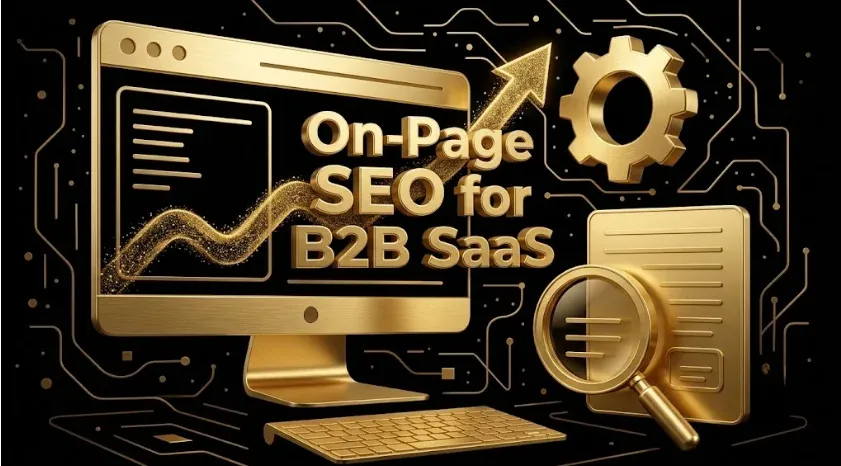
On-Page SEO for B2B SaaS: Optimizing Pages That Rank and Get Cited
Quick answer: On-page SEO is optimizing individual pages to rank and get cited — and the single most important factor is matching search intent, because a page that doesn’t answer what the searcher actually wants won’t rank no matter how well it’s technically optimized. Beyond intent, on-page SEO covers title tags and metadata, clear heading structure, genuine content depth, E-E-A-T signals, internal linking, and — increasingly — structuring content so AI answer engines can extract and cite it (direct answers, definitions, FAQs). Keyword usage matters but naturally, not stuffed. On-page is table stakes; the page must genuinely be the best answer to the query.
Key takeaways
- Match search intent first — it’s the #1 on-page factor.
- Title, metadata, and headings structure the page for search and readers.
- Depth and E-E-A-T signal genuine expertise, which search rewards.
- Structure for AI answers — direct answers, definitions, FAQs get cited.
- Use keywords naturally, never stuffed — relevance, not repetition.
On-page SEO is where content and optimization meet — making each page genuinely the best, clearest answer to the query it targets. This guide covers the intent-match imperative, title and metadata, structure, depth and E-E-A-T, internal linking, and structuring for AI answers.
What is on-page SEO?
On-page SEO is optimizing the elements of an individual page — its content, structure, and metadata — so it ranks well and satisfies searchers. Unlike technical SEO (whether the page can be crawled) or link building (external authority), on-page is about the page itself: does it answer the query, is it structured clearly, does it signal expertise, and can search engines and AI understand it. Good on-page SEO makes a page the clear best answer to its target query — for both the human reading it and the machines deciding whether to rank and cite it.
What’s the single most important on-page factor?
Matching search intent. Before titles, keywords, or any other tactic, the page must genuinely answer what the searcher wants. Every search has an intent — to learn, compare, or act — and if your page doesn’t satisfy that intent, no amount of optimization saves it. A page targeting “best CRM for startups” must actually help someone choose a CRM (a comparison), not pitch your product; a page targeting “what is lead scoring” must explain the concept, not sell. Search engines increasingly measure whether pages satisfy intent (through engagement signals), so intent match is both the starting point and the thing everything else supports. Get the intent right, and the rest of on-page SEO amplifies a page that deserves to rank; get it wrong, and you’re optimizing a page that never will.
How do you optimize titles and metadata?
- Title tag. The clickable headline in search results — include the target term naturally, convey the value, and make it compelling. It’s a major on-page signal and drives click-through.
- Meta description. Doesn’t directly rank you, but influences click-through — write a compelling, accurate summary (and keep it a sensible length so it isn’t truncated).
- URL. Clean, descriptive URLs reflecting the page topic.
- Match the query. Titles and metadata should reflect the search intent, so searchers recognize the page as their answer.
Title and metadata are the page’s pitch in the search results — they determine whether a ranking page actually gets clicked.
How should you structure a page?
Clear structure helps both readers and search engines:
- One clear H1 stating the page’s topic.
- Logical headings (H2, H3) that break content into a scannable hierarchy reflecting subtopics.
- Scannable format. Short paragraphs, lists, and tables where they aid clarity — people scan before they read.
- Answer-first where appropriate. Lead with the answer, then elaborate — good for readers and essential for AI extraction.
Structure isn’t decoration; it’s how both humans and machines navigate and understand the page, and it directly supports being cited in AI answers.
Why do depth and E-E-A-T matter?
Content depth and quality are what actually earn rankings once intent and structure are right. A page that comprehensively, accurately, and genuinely satisfies the query — better than competing pages — is what search aims to rank. Thin content that technically targets a keyword but doesn’t deliver loses to depth. E-E-A-T (Experience, Expertise, Authoritativeness, Trustworthiness) is how search assesses whether content is credible — signals like genuine expertise, accuracy, author credibility, and trustworthiness. For B2B, where accuracy and credibility matter enormously, demonstrating real expertise (specific, accurate, experience-informed content) is both an E-E-A-T signal and what genuinely serves buyers. Depth and E-E-A-T aren’t tricks; they’re the page actually being good, which is what modern search rewards.
How does internal linking help on-page?
Internal linking supports on-page SEO by connecting the page into your site’s structure — linking to related pages (and being linked from them) passes authority, helps search understand relationships, and guides readers to related content. Use descriptive anchor text, link to genuinely relevant pages, and connect each page into its content cluster. Internal linking is one of the most underused on-page levers — it strengthens individual pages and the cluster they belong to at once.
How do you structure content for AI answers?
As search shifts toward AI-generated answers, structuring content for extraction matters more:
- Direct answers. Answer the query clearly and early (a “quick answer” up top), so AI can extract it.
- Definitions. Define key terms plainly, since AI engines draw on clear definitions.
- FAQs. Question-and-answer sections map directly to how people ask AI questions.
- Structured data. Schema markup helps machines parse your content.
- Clear, factual writing. Unambiguous, accurate statements are easier for AI to cite confidently.
This is answer engine optimization at the page level — structuring genuinely good content so AI engines can find, trust, and cite the answer within it.
How should you use keywords?
Naturally, not mechanically. Include your target term and related terms where they fit genuinely — in the title, headings, and body where relevant — but write for humans first. Keyword stuffing (cramming terms unnaturally) hurts rather than helps; modern search understands topics and synonyms, so covering the topic thoroughly and naturally matters more than repeating an exact phrase. Use the language your audience uses, cover the subtopics they care about, and let keywords appear naturally in genuinely good content. Relevance and comprehensiveness beat repetition.
Field note: The on-page SEO mistake that persists longest is treating it as a checklist of tricks — exact-match keyword in the title, keyword density at some magic percentage, an H1 with the term — applied to content that doesn’t actually answer the query well. You can check every box and still not rank, because you optimized the packaging of a page that isn’t the best answer. Modern on-page SEO is much simpler and much harder than the checklist: be genuinely the best, clearest, most complete answer to the search intent, and structure it so humans and machines can both extract that answer. The tactics (title, headings, internal links, schema) matter, but only as amplifiers of a page that deserves to rank. Start with “is this genuinely the best answer to what this person is searching?” — if no, no checklist saves it; if yes, the on-page tactics help it get the ranking it deserves.
Honest limitations
- On-page is table stakes. Everyone optimizes on-page, so it rarely wins alone; it’s necessary but not a differentiator by itself.
- Intent can be ambiguous. Search intent isn’t always obvious; you may need to test and observe what actually satisfies searchers.
- Depth isn’t length. More words don’t mean better; padding to hit a word count hurts. Depth means comprehensively satisfying intent, concisely.
- E-E-A-T is indirect. It’s not a single fixable setting but the cumulative impression of credibility, built over time through genuine quality.
- Tactics change; quality doesn’t. Specific on-page best practices shift, but “be the best answer” endures — chase the principle, not every tactic.
Frequently Asked Questions
Q1. What is on-page SEO?
On-page SEO is optimizing an individual page’s content, structure, and metadata so it ranks well and satisfies searchers — distinct from technical SEO (crawlability) and link building (external authority). It’s about making the page itself the clear best answer to its target query, for both readers and the search and AI engines deciding whether to rank and cite it.
Q2. What’s the most important on-page SEO factor?
Matching search intent — the page must genuinely answer what the searcher wants (to learn, compare, or act) before any other tactic matters. A page that doesn’t satisfy the query’s intent won’t rank no matter how well it’s optimized, while getting intent right means everything else amplifies a page that deserves to rank.
Q3. How do you optimize title tags for SEO?
Include the target term naturally, convey the page’s value, make it compelling to earn clicks, and ensure it reflects the search intent so searchers recognize the page as their answer. The title tag is a major on-page signal and drives click-through, so it’s both a ranking and a click-through lever.
Q4. What is E-E-A-T in SEO?
E-E-A-T stands for Experience, Expertise, Authoritativeness, and Trustworthiness — how search assesses whether content is credible, through signals like genuine expertise, accuracy, author credibility, and trust. For B2B, where accuracy matters enormously, demonstrating real, experience-informed expertise is both an E-E-A-T signal and what genuinely serves buyers.
Q5. How do you structure content for AI answers?
Lead with direct answers to the query (a quick answer up top), define key terms plainly, include FAQ sections that map to how people ask AI questions, add schema markup so machines can parse the content, and write clearly and factually. This answer-engine optimization structures genuinely good content so AI engines can find, trust, and cite the answer within it.
Q6. Does keyword density matter for SEO?
Not as a target — keyword stuffing (cramming terms unnaturally) hurts rather than helps, since modern search understands topics and synonyms. Include your target and related terms naturally where they fit, but cover the topic thoroughly and write for humans first. Relevance and comprehensiveness beat exact-phrase repetition.
Q7. Is on-page SEO enough to rank?
No — on-page SEO is table stakes that nearly everyone does, so it rarely wins alone. It must be paired with technical SEO (so pages can be crawled), genuine content depth and E-E-A-T (so pages deserve to rank), and authority from links. On-page amplifies a page that’s genuinely the best answer; it can’t rescue one that isn’t.
Sources & further reading
- Optimize on-page by matching search intent first, then title, structure, depth, E-E-A-T, internal linking, and AI-answer structure.
- Search engine documentation (Google Search Central) on helpful content and E-E-A-T; validate against your own rankings and engagement.
This guide is educational; on-page best practices evolve but “be the best answer to the query” endures, so validate against your own results.
Related guides: Technical SEO for B2B SaaS · Link Building for B2B SaaS · Content Clusters & Topical Authority for B2B SaaS · Keyword Research for B2B SaaS · Ad Copywriting for B2B: Formulas That Convert.