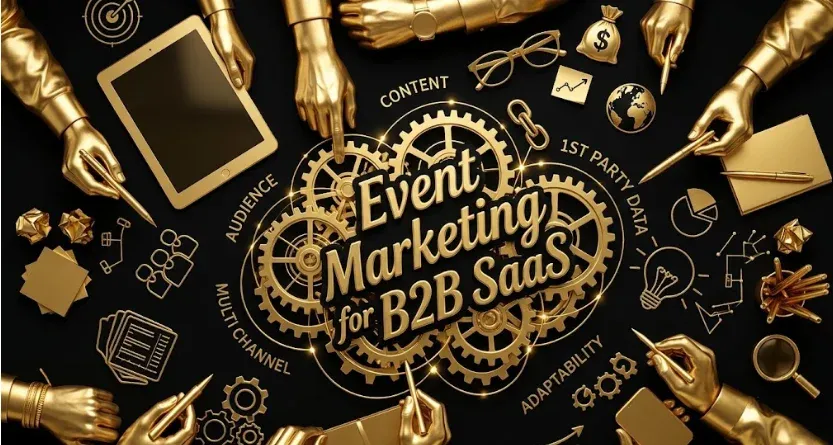
Event Marketing for B2B SaaS: Where the Follow-Up Wins
Quick answer: Event marketing is using events — your own hosted events, sponsorships, trade shows, and conferences — to build relationships, generate pipeline, and raise brand awareness through concentrated, in-person engagement with buyers. Events work because they put you face-to-face with many relevant buyers at once, building trust and relationships digital can’t match. But events are expensive — often among the costliest marketing investments — so they must be justified by real pipeline, not just presence. The single biggest determinant of event ROI isn’t the event itself but the follow-up: most event value is lost afterward through poor or nonexistent follow-up, while disciplined follow-up is what converts event conversations into pipeline. Run events with clear goals and relentless follow-up, or don’t run them.
Key takeaways
- Event marketing uses events — hosted, sponsored, trade shows, conferences.
- Events work through concentrated, in-person buyer engagement.
- Events are expensive — they must be justified by real pipeline.
- Follow-up decides ROI — most event value is lost in poor follow-up.
- Run events with clear goals and relentless follow-up, or skip them.
Events are among the most expensive things B2B marketing does — and the most commonly wasted, because the value is won or lost in the follow-up almost nobody does well. This guide covers what event marketing is, event types, why events work, the cost/ROI reality, when they’re worth it, and the follow-up that decides everything.
What is event marketing?
Event marketing is the use of events — whether your own hosted events, sponsored events, trade shows, or industry conferences — to build relationships, generate pipeline, and raise brand awareness through in-person (or virtual) engagement with buyers. It’s a core part of field marketing and spans a range of formats, from a small hosted dinner to a major trade-show booth to a large company-hosted conference. The common thread is using an event as a venue to engage buyers — meeting them, building relationships, demonstrating value, and generating pipeline. Event marketing exists because events concentrate relevant buyers and enable the in-person engagement that builds trust and relationships, making them valuable for relationship-driven B2B — provided the considerable cost is justified by real outcomes.
What are the types of events?
| Type | What it is |
|---|---|
| Hosted events | Your own events (dinners, summits, user conferences) |
| Sponsorships | Sponsoring others’ events for presence |
| Trade shows | Industry exhibitions with booths |
| Conferences | Industry conferences (attending, speaking, sponsoring) |
| Field events | Regional field-marketing events |
| Webinar marketing | Virtual events (covered separately) |
These range widely in scale, cost, and purpose. Hosted events (from intimate dinners to large user conferences) give you full control and deep engagement but require significant effort. Sponsorships and trade shows put you where buyers already gather, buying presence and access. Conferences offer multiple roles — attending, speaking (for authority), or sponsoring. Each type suits different goals and budgets, but all share the need to justify their cost through real outcomes and — critically — to follow up effectively.
Why do events work?
Because events concentrate relevant buyers and enable high-value in-person engagement:
- Concentrated buyers. Events (especially industry conferences and trade shows) gather many relevant buyers in one place — rare, efficient access to your market.
- In-person trust. Face-to-face engagement builds trust and relationships faster than digital, valuable for relationship-driven deals.
- Depth of engagement. Events enable richer, deeper engagement (real conversations, demos, relationship-building) than most digital touchpoints.
- Brand presence. A strong event presence builds brand and credibility in your market.
Events work because they combine concentrated access to buyers with the depth and trust of in-person engagement — a powerful combination for high-value B2B. The value is real, which is why events remain a major B2B channel. But that value only materializes if the (substantial) cost is justified and the follow-up captures it.
What’s the cost and ROI reality?
Events are expensive — often among the most costly marketing investments — so ROI must be scrutinized. Between venue, travel, booth, sponsorship fees, staff time, and materials, events consume significant budget, and a major conference presence or hosted event can cost enormously. This means event marketing must be justified by genuine outcomes (pipeline, relationships, deals), not just “being there.” The common failure is treating event presence as the goal — showing up because competitors do, or because you always have — without a clear line to pipeline. Given the cost, events demand clear goals and honest ROI assessment: what pipeline and outcomes justify this spend? Some events are genuinely worth their high cost; others are expensive habits that generate little. The discipline is treating events as major investments requiring justification and measurement, not default line items. And the biggest lever on that ROI, by far, is the follow-up.
When are events worth it?
Events are worth it under conditions similar to field marketing:
- High-value, relationship-driven deals. When deals are large enough that the relationships and pipeline events build justify their cost — enterprise and high-ACV.
- Where your buyers gather. Events (especially industry conferences) are worth it when they concentrate your actual buyers; irrelevant events aren’t.
- With clear goals and follow-up capacity. Events are worth it only if you’ll set clear goals and follow up effectively — without that, even a good event wastes the spend.
Events are less worth it for low-ACV or self-serve businesses (where the cost rarely pencils out), for events that don’t gather your real buyers, and — crucially — when you lack the discipline to follow up. The honest test: will this event reach enough of the right buyers, and will we convert those interactions through genuine follow-up, to justify the considerable cost? If yes, worth it; if no, skip it, however tempting the presence.
Why does follow-up decide event ROI?
Because most of an event’s value is realized after the event, through follow-up — and most companies do this poorly, wasting the investment. You can run a great event, have excellent conversations, and collect promising contacts — and then squander nearly all of it by failing to follow up effectively. The follow-up is where event conversations become pipeline, and it’s where most event ROI is lost:
- Most event value is post-event. The conversations and contacts from an event are raw material; follow-up converts them into pipeline and deals.
- Poor follow-up wastes the spend. Slow, generic, or nonexistent follow-up lets warm event interactions go cold, wasting the entire (expensive) event.
- Disciplined follow-up captures the value. Prompt, personalized, well-organized follow-up — coordinated with sales — is what turns events into pipeline.
This is the great event-marketing truth: the event is only half the work, and the follow-up is the half that determines ROI. Companies that plan the follow-up as rigorously as the event capture the value; those that treat the event as the finish line lose most of it. Given how expensive events are, poor follow-up is one of the most costly mistakes in B2B marketing — paying dearly for conversations you then let go cold.
Field note: The dirty secret of event marketing is that the event is the easy part, and the follow-up — the part that actually produces ROI — is where nearly everyone fails. Companies spend a fortune on a conference booth or a hosted summit, staff it well, have genuinely good conversations, collect a stack of promising contacts… and then follow up days or weeks later with a generic templated email, if at all. All that expensive, warm, in-person engagement goes cold, and the event gets written off as low-ROI — when the real problem was that nobody captured the value the event created. The math is brutal: events are among the most expensive things marketing does, and the follow-up that converts them costs comparatively little, yet the cheap, decisive follow-up is what gets neglected. The companies that win at events plan the follow-up before the event even happens — who follows up, how fast, how personally, coordinated with sales — treating the event as the start of the work, not the end. If you’re going to pay enormous sums to have great conversations at events, the least you can do is follow up on them properly, because that follow-up is where the entire return lives. An event without a follow-up plan isn’t a marketing investment; it’s an expensive way to have conversations you’ll waste.
Honest limitations
- Events are expensive. Among the costliest marketing investments, events demand genuine ROI justification, not default spending.
- Follow-up is usually the weak link. Most event value is lost in poor follow-up; capturing it requires discipline most companies lack.
- Presence isn’t a strategy. Being at an event without clear goals and follow-up wastes the spend; presence alone achieves little.
- Not for every business. Events fit high-value, relationship-driven B2B; for low-ACV or self-serve, they often don’t pencil out.
- ROI is hard to measure precisely. Event impact (relationships, influenced pipeline) is real but can be hard to attribute cleanly.
Frequently Asked Questions
Q1. What is event marketing?
Event marketing is using events — your own hosted events, sponsorships, trade shows, and industry conferences — to build relationships, generate pipeline, and raise brand awareness through in-person (or virtual) engagement with buyers. A core part of field marketing, it spans formats from small dinners to major trade-show booths, using events as venues to engage buyers, build relationships, and generate pipeline where cost is justified by outcomes.
Q2. What types of events are there?
Hosted events (your own — dinners, summits, user conferences), sponsorships (sponsoring others’ events for presence), trade shows (industry exhibitions with booths), conferences (attending, speaking, or sponsoring), field events (regional field-marketing events), and webinars (virtual events, covered separately). They range widely in scale, cost, and purpose — hosted events give control and depth, sponsorships and trade shows buy access, conferences offer multiple roles.
Q3. Why does event marketing work?
Because events concentrate relevant buyers (gathering many in one place — rare, efficient market access), enable in-person trust (face-to-face builds relationships faster than digital), allow depth of engagement (real conversations and demos), and build brand presence. Events combine concentrated buyer access with the depth and trust of in-person engagement — powerful for high-value B2B, provided the cost is justified and follow-up captures the value.
Q4. Are events worth the cost for B2B SaaS?
Events are expensive — often among the costliest marketing investments — so they’re worth it only when justified by genuine outcomes: high-value, relationship-driven deals where the pipeline events build justifies the cost, events that gather your actual buyers, and when you’ll follow up effectively. They’re less worth it for low-ACV or self-serve businesses, irrelevant events, or when you lack follow-up discipline. Treat events as major investments requiring justification.
Q5. Why is follow-up so important in event marketing?
Because most of an event’s value is realized after the event, through follow-up — the conversations and contacts are raw material that follow-up converts into pipeline. Poor, slow, or nonexistent follow-up lets warm event interactions go cold, wasting the entire expensive event, while prompt, personalized follow-up coordinated with sales captures the value. The follow-up is the half of event marketing that determines ROI.
Q6. What’s the biggest event marketing mistake?
Treating the event as the finish line rather than the start — spending heavily on a booth or hosted event, having good conversations, then following up late with generic emails or not at all, letting all that warm engagement go cold. Given how expensive events are and how comparatively cheap follow-up is, neglecting follow-up is one of the costliest mistakes in B2B marketing: paying dearly for conversations you then waste.
Q7. How do you run events well?
Set clear goals tied to pipeline (not just presence), choose events that gather your actual buyers, and — most importantly — plan the follow-up before the event: who follows up, how fast, how personally, coordinated with sales. Treat the event as the start of the work, not the end, and measure on the pipeline and relationships it produces, not attendance. The follow-up discipline is what separates events that pay off from expensive ones that don’t.
Sources & further reading
- Justify events by real pipeline, choose events that gather your buyers, and plan relentless follow-up before the event — follow-up decides ROI.
- Events are expensive and fit high-value relationship-driven B2B; measure on pipeline, not attendance, and validate against your own results.
This guide is educational; events are costly and their ROI depends heavily on follow-up, so justify them by pipeline and validate against your own outcomes.
Related guides: Field Marketing for B2B SaaS · Webinar Marketing for B2B SaaS · Webinar & Event Promotion Ads for B2B · Account-Based Marketing for B2B SaaS · Sales & Marketing Alignment for B2B SaaS.