Pipeline,
not promises.
Senior operators audit your funnel in 48 hours. Ship 3 specific moves in 30 days.
- Full-funnel audit · 4 velocity levers
- 3 wins to ship in 30 days
- $3K flat · month-to-month
30-min call · No commitment
- Full-funnel audit · 4 velocity levers
- 3 wins to ship in 30 days
- $3K flat · month-to-month
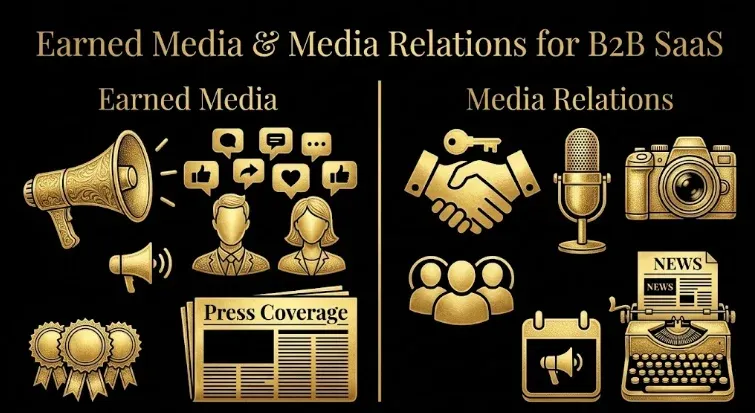
Earned Media & Media Relations for B2B SaaS
Quick answer: Earned media is coverage, mentions, and citations you earn (not pay for) from journalists, publications, and other outlets — and getting it depends on being genuinely newsworthy and useful to journalists, not on spraying press releases. Media relations is the practice of building genuine relationships with journalists and earning coverage by helping them do their job: providing newsworthy stories, genuine expertise, original data, and being a reliable, responsive source. The failure mode is treating journalists as distribution channels for your promotional messages (spray-and-pray press releases about your product), which they ignore. The winning approach is being genuinely useful to journalists — offering real stories, expert commentary, and data they can use — and building relationships over time. Earn coverage by helping journalists, not by pitching promotions.
Key takeaways
- Earned media is coverage you earn (not pay for) from outlets.
- Getting it depends on newsworthiness and being useful to journalists.
- Media relations = genuine journalist relationships, not press-release spraying.
- Help journalists do their job — stories, expertise, data — to earn coverage.
- Promotional pitches get ignored; genuine usefulness gets covered.
Earned media coverage carries a credibility ads can’t buy — but earning it is widely misunderstood as blasting press releases, which journalists ignore. This guide covers what earned media is, what actually earns coverage, being a useful source, building relationships, and why newsworthiness matters.
What is earned media?
Earned media is coverage, mentions, citations, and exposure you earn from third-party outlets — journalists, publications, podcasts, newsletters, and other media — rather than pay for. It includes being covered in an article, quoted as an expert, cited for data, featured in a story, or mentioned by a credible outlet. Media relations is the practice of earning this coverage — building relationships with journalists and outlets and providing what they need to cover you. Earned media is a core part of PR, and its defining feature is that it’s earned (through newsworthiness, value, and relationships), not bought — which is exactly why it carries credibility that paid channels don’t. When a respected outlet covers or cites you, that earned third-party validation is trusted in a way advertising isn’t. Earned media is how you build credibility and awareness through the trusted voices of media rather than your own paid promotion.
What actually earns coverage?
Coverage is earned by being newsworthy and useful to journalists — not by promoting yourself:
- Genuine newsworthiness. Journalists cover what’s newsworthy — genuinely new, interesting, relevant, or significant to their audience. A newsworthy story earns coverage; a promotional message doesn’t.
- Being useful to journalists. Journalists have a job to do (write stories their audience values), and you earn coverage by helping them do it — providing stories, expertise, data, and sources they can use.
- Original data and research. Original data and research are highly earned-media-worthy — journalists love data to cite, making original research one of the best ways to earn coverage.
- Expert commentary. Being a credible expert who can comment on relevant topics/trends gives journalists valuable sources — earning coverage through expertise.
- Genuinely interesting stories. Real, interesting stories (not thinly-veiled promotion) that fit what journalists cover.
The core principle: you earn coverage by being newsworthy and useful to journalists, not by promoting yourself. Journalists don’t exist to distribute your marketing messages; they cover what’s genuinely newsworthy and useful to their audience. So earning coverage means offering genuine news value, expertise, and data — helping journalists rather than pitching promotions. This is why most press releases fail (they’re promotional, not newsworthy) and why original data and genuine expertise succeed (they’re genuinely useful to journalists). Be useful and newsworthy, and coverage follows; pitch promotions, and you’re ignored.
Why does being a useful source matter?
Because journalists cover people who help them, and building a reputation as a genuinely useful source earns ongoing coverage. A journalist’s job is to produce good stories on deadline, and a source who reliably helps them do that — providing genuine expertise, relevant data, quick responses, and honest information — becomes someone they return to and cover. Being a useful source means:
- Providing genuine value to journalists. Real expertise, useful data, honest perspective — things that genuinely help journalists write good stories.
- Being reliable and responsive. Journalists work on deadlines; a source who responds quickly and reliably is far more valuable (and coverable) than one who doesn’t.
- Being honest and helpful, not just promotional. A source who genuinely helps (even when it’s not directly promotional) builds trust and relationship; one who only pushes their agenda doesn’t.
- Building a reputation as a go-to source. Over time, being consistently useful makes you a journalist’s go-to source on your topic — earning ongoing coverage.
Being a genuinely useful source is the foundation of earned media, because journalists cover and return to sources who help them. This reframes media relations from “pitching for coverage” to “being genuinely useful to journalists” — which is what actually earns coverage over time. The best-covered companies aren’t the ones with the most press releases; they’re the ones whose experts are genuinely useful, responsive sources journalists rely on. Be the source journalists want to work with.
How do you build journalist relationships?
Media relations is fundamentally about genuine relationships, built over time:
- Identify relevant journalists. Find the journalists and outlets who cover your space and audience — relevance is essential (pitching irrelevant journalists wastes everyone’s time).
- Understand what they cover. Learn what each journalist actually writes about and what they find valuable — so you can be genuinely useful to them specifically.
- Offer genuine value. Provide what’s useful to them — relevant stories, data, expertise — rather than generic promotional pitches.
- Be reliable and responsive. Respond quickly and reliably, respecting their deadlines — becoming a source they can count on.
- Build the relationship over time. Cultivate genuine, ongoing relationships (not just transactional pitches), becoming a trusted, go-to source.
- Respect their role. Understand journalists have a job and integrity; help them do it well rather than trying to use them.
Building journalist relationships is about genuine, mutually valuable relationships — being a useful, reliable, relevant source journalists trust and return to — not one-off transactional pitches. This relationship-building takes time and genuine effort, but it’s what produces sustained earned media: journalists cover sources they know, trust, and find useful. The transactional spray-and-pray approach (blasting press releases to journalist lists) fails because it’s not relationship-based or genuinely useful; the relationship approach succeeds because it makes you a source journalists genuinely want to work with. Invest in genuine relationships, not mass pitching.
Why does newsworthiness matter more than promotion?
Because journalists cover news, not promotion — and the fundamental mismatch behind failed media relations is offering promotion when journalists want newsworthiness. A company’s instinct is to pitch what it wants covered (its product, its announcement, its message), but journalists cover what’s newsworthy to their audience — which is usually not your promotional message. This mismatch is why most press releases and pitches fail: they offer promotion (what the company wants said) when journalists need newsworthiness (what their audience values). The fix is reframing from “what do we want covered?” to “what’s genuinely newsworthy and useful to this journalist’s audience?” — offering genuine news value, data, expertise, or interesting stories rather than promotion. Sometimes your genuine news (a significant development, real data, expert perspective on a trend) is newsworthy — pitch that. But dressing promotion as news fools no journalist. Newsworthiness over promotion is the mindset that earns coverage: offer what journalists and their audiences genuinely value, not what you wish they’d say about you.
Field note: The reason most B2B PR fails is a fundamental misunderstanding of what journalists are for. Companies treat journalists as distribution channels — free advertising pipes to pump their promotional messages through — and so they blast out press releases about product updates and company milestones that they find exciting and journalists find irrelevant. The journalists, drowning in such pitches, ignore them, and the company concludes PR doesn’t work. But the company was never doing PR; it was spamming journalists with promotion. Journalists aren’t distribution channels for your marketing; they’re professionals with a job — writing stories their audience genuinely values — and they cover the sources who help them do that job well. The reframe that changes everything is to stop asking “how do we get journalists to cover our message?” and start asking “how do we become genuinely useful to journalists?” — offering real newsworthiness, original data they can cite, expert commentary they need, and reliable responsiveness, built into genuine relationships over time. Do that, and coverage follows naturally, because you’ve become a source worth covering. The companies with strong earned media aren’t the ones with the most aggressive press-release operations; they’re the ones whose experts journalists have on speed dial because they’re genuinely, reliably useful. Help journalists do their job, and they’ll help build your reputation; spam them with promotion, and they’ll ignore you forever.
Honest limitations
- Coverage can’t be guaranteed. Earned media is earned at journalists’ discretion; you can be useful and newsworthy but can’t guarantee or control coverage.
- It requires genuine newsworthiness. Earning coverage requires genuine news value, data, or expertise; you can’t manufacture coverage from promotion.
- It’s relationship- and time-intensive. Building journalist relationships and earning sustained coverage takes genuine, ongoing effort over time.
- Results are hard to measure directly. Earned media’s impact (reputation, credibility, awareness) is real but directionally measured, like other PR.
- It’s not controllable like ads. You don’t control the message in earned coverage the way you do in paid ads; journalists write their own stories.
Frequently Asked Questions
Q1. What is earned media?
Earned media is coverage, mentions, citations, and exposure you earn from third-party outlets — journalists, publications, podcasts, newsletters — rather than pay for, including being covered in an article, quoted as an expert, or cited for data. Its defining feature is that it’s earned through newsworthiness, value, and relationships, not bought — which is why it carries credibility paid channels don’t. When a respected outlet covers you, that earned validation is trusted in a way advertising isn’t.
Q2. How do you actually earn media coverage?
By being genuinely newsworthy and useful to journalists, not by promoting yourself — journalists cover what’s newsworthy (genuinely new, interesting, relevant to their audience) and you earn coverage by helping them do their job (providing stories, expertise, data, sources they can use). Original data and research, expert commentary, and genuinely interesting stories earn coverage; promotional press releases don’t. Be useful and newsworthy, and coverage follows.
Q3. Why is being a useful source important?
Because journalists cover people who help them — a source who reliably provides genuine expertise, relevant data, quick responses, and honest information becomes someone journalists return to and cover. Being useful means providing genuine value to journalists, being reliable and responsive (respecting deadlines), being honest and helpful rather than just promotional, and building a reputation as a go-to source. The best-covered companies have experts journalists rely on, not the most press releases.
Q4. How do you build relationships with journalists?
Identify relevant journalists who cover your space, understand what they actually write about, offer genuine value (relevant stories, data, expertise) rather than generic pitches, be reliable and responsive to their deadlines, build genuine ongoing relationships (not transactional pitches), and respect their role and integrity. Media relations is about genuine, mutually valuable relationships — being a useful, reliable source journalists trust and return to — not one-off mass pitching, which fails.
Q5. Why do press releases usually fail?
Because they’re promotional, not newsworthy — companies blast press releases about product updates and milestones they find exciting but journalists find irrelevant, treating journalists as distribution channels for marketing messages. Journalists cover newsworthiness (what their audience values), not promotion (what the company wants said), so promotional press releases get ignored. Earning coverage requires offering genuine news value, data, and expertise, not spraying promotional releases.
Q6. Why does newsworthiness matter more than promotion?
Because journalists cover news, not promotion — the fundamental mismatch behind failed media relations is offering promotion (what the company wants covered) when journalists need newsworthiness (what their audience values). Most pitches fail from this mismatch. The fix is reframing from “what do we want covered?” to “what’s genuinely newsworthy and useful to this journalist’s audience?” — offering genuine news, data, expertise, or interesting stories. Dressing promotion as news fools no journalist.
Q7. Can you guarantee media coverage?
No — earned media is earned at journalists’ discretion, so you can be genuinely useful and newsworthy but can’t guarantee or control coverage the way you control paid ads. You also don’t control the message in earned coverage; journalists write their own stories. What you can do is maximize your chances by being genuinely newsworthy, useful, and relationship-oriented — becoming a source worth covering — but coverage itself remains the journalist’s decision, which is part of what makes it credible.
Sources & further reading
- Earn media coverage by being genuinely newsworthy and useful to journalists — original data, expert commentary, real stories — and building relationships over time.
- Treat journalists as professionals you help, not distribution channels; offer newsworthiness over promotion and validate earned-media impact directionally.
This guide is educational; earned media is earned at journalists’ discretion through genuine newsworthiness and relationships, so be genuinely useful and validate impact directionally.
Related guides: PR & Communications for B2B SaaS · Thought Leadership for B2B SaaS · Original Research Content for B2B SaaS · Analyst Relations for B2B SaaS · Content Distribution for B2B SaaS.