Pipeline,
not promises.
Senior operators audit your funnel in 48 hours. Ship 3 specific moves in 30 days.
- Full-funnel audit · 4 velocity levers
- 3 wins to ship in 30 days
- $3K flat · month-to-month
30-min call · No commitment
- Full-funnel audit · 4 velocity levers
- 3 wins to ship in 30 days
- $3K flat · month-to-month
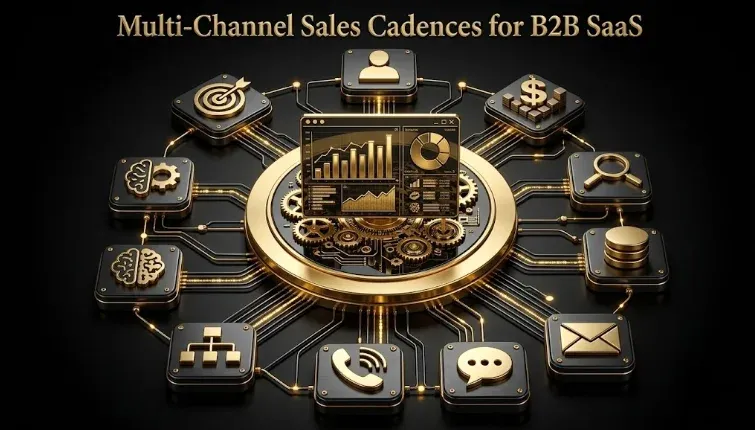
Multi-Channel Sales Cadences for B2B SaaS
Quick answer: A sales cadence (or sequence) is a coordinated series of outreach touches across multiple channels — email, phone, LinkedIn — over a defined period, and multi-channel cadences work better than single-channel outreach because reaching prospects across channels increases the chance of connecting. Rather than a single email or call, a cadence combines touches across channels in a planned sequence, since different prospects respond to different channels and multiple relevant touches connect more than one. The key tensions are persistence versus pestering (enough touches to connect, without becoming annoying spam) and relevance across every touch (each touch should add value, not just repeat “just following up”). Well-designed cadences — multi-channel, appropriately persistent, and relevant throughout — are how modern outbound actually connects; poorly-designed ones (single-channel, or relentless generic follow-ups) annoy and fail.
Key takeaways
- A cadence is a coordinated series of touches across channels over time.
- Multi-channel beats single-channel — more ways to connect.
- Persistence, not pestering — enough touches without becoming spam.
- Every touch should add relevance, not just “following up.”
- Well-designed cadences are how modern outbound connects.
A single cold email or call rarely connects — modern outbound works through coordinated cadences across channels. But the line between persistent and annoying is real, and generic follow-ups fail. This guide covers what cadences are, why multi-channel wins, persistence vs. pestering, keeping touches relevant, and designing cadences. (This complements the channel-specific cold email and cold calling guides — here the focus is coordinating channels into a cadence.)
What is a sales cadence?
A sales cadence (also called a sequence) is a coordinated, planned series of outreach touches to a prospect across multiple channels — email, phone, LinkedIn, and others — over a defined period, designed to connect with the prospect and generate a response. Rather than a single touch (one email, one call), a cadence is a sequence of touches, coordinated across channels and spaced over time (e.g., a multi-week sequence of emails, calls, and LinkedIn touches). Cadences are how modern outbound sales development typically works — recognizing that a single touch rarely connects, so a coordinated series across channels is needed. Note this is distinct from lifecycle/nurture email sequences (automated marketing emails to known contacts); a sales cadence is outbound outreach (often multi-channel, sales-driven) to prospects. The cadence coordinates the multiple touches across channels into a planned, effective outreach sequence.
Why do multi-channel cadences beat single-channel?
Because reaching prospects across multiple channels connects more effectively than any single channel alone:
- Different prospects respond to different channels. Some prospects respond to email, others to phone, others to LinkedIn — a multi-channel cadence reaches each prospect through the channel they respond to, while a single channel misses those who prefer others.
- Multiple touches connect more. A single touch (one email) is easily missed or ignored; multiple coordinated touches increase the chance of connecting, as long as they’re relevant (not spam).
- Channels reinforce each other. Touches across channels can reinforce (a LinkedIn view before an email, a call referencing an email) — coordinated multi-channel outreach is more than the sum of single touches.
- Reaching prospects where they are. Multi-channel cadences meet prospects across the channels they use, rather than betting everything on one.
The core reason multi-channel cadences win is that a single touch on a single channel rarely connects, while coordinated touches across multiple channels significantly increase the chance of reaching and engaging the prospect. This is why modern outbound is cadence-based and multi-channel rather than single-touch or single-channel. But — critically — this only works when the touches are relevant and appropriately persistent (not a relentless generic blast across channels, which is just multi-channel spam). Multi-channel done right (coordinated, relevant touches) beats single-channel; multi-channel done wrong (relentless generic touches everywhere) is worse than a single good touch.
What’s the difference between persistence and pestering?
This is the central tension in cadence design: persistence (enough touches to connect) versus pestering (so many touches, or so aggressive, that you become annoying spam):
- Persistence is necessary. Since a single touch rarely connects, some persistence (multiple touches over time) is needed to reach prospects — giving up after one touch means missing most prospects. Appropriate persistence is effective.
- Pestering is counterproductive. But too many touches, too aggressively, too relentlessly becomes pestering — annoying the prospect, damaging your reputation, and reducing (not increasing) the chance of a positive response. Relentless generic follow-ups are pestering.
- The line is relevance and respect. The difference between persistence and pestering is largely about relevance and respect — persistent-but-relevant touches (each adding value, respecting the prospect) are acceptable, while relentless-and-generic touches (repeating “just following up,” ignoring signals) are pestering.
- Reading signals. Persistence should respond to signals — backing off from clear disinterest rather than relentlessly continuing regardless.
Getting the persistence-vs-pestering balance right is essential: too little persistence (giving up too soon) misses connectable prospects, while too much (pestering) annoys and backfires. The line isn’t just a number of touches but relevance and respect — appropriately persistent, relevant, respectful touches connect, while relentless, generic, disrespectful ones pester. Design cadences with enough persistence to connect (multiple touches over time) but calibrated to stay relevant and respectful, responding to signals rather than blindly relentless. Persist relevantly; don’t pester.
Why must every touch add relevance?
Because touches that add no value (“just following up,” “circling back,” “bumping this to the top of your inbox”) are pestering, while touches that add relevance earn attention. A common cadence failure is filling the sequence with empty follow-up touches that just repeat the ask without adding anything — which annoys prospects and wastes touches. The principle: every touch should add genuine relevance or value, not just repeat “following up”:
- Empty follow-ups pester. Touches that add nothing (“just checking in”) are the essence of pestering — they consume touches and annoy without earning attention.
- Relevant touches earn attention. Touches that add genuine value (a relevant insight, a different angle on the prospect’s problem, useful information) earn attention and give a reason to respond.
- Vary the value across touches. A good cadence varies its touches — different angles, different value, different channels — rather than repeating the same ask, keeping each touch relevant.
- Relevance justifies persistence. Relevant touches justify persistence (each adds value, so continuing is reasonable), while empty touches make persistence into pestering.
Making every touch add relevance is what allows a cadence to be persistent without being pestering — because relevant, valuable touches are welcome (or at least tolerable) in a way empty “just following up” touches aren’t. This connects to the outbound relevance principle: relevance is what makes outreach work, in cadences as everywhere. Design cadences where each touch genuinely adds relevance or value, varying angles and channels — not a sequence of empty follow-ups. Relevant persistence connects; empty persistence pesters.
How do you design a sales cadence?
- Plan the multi-channel sequence. Design a coordinated sequence across channels (email, phone, LinkedIn) over a defined period, rather than single touches.
- Calibrate persistence. Include enough touches over enough time to connect (persistence), calibrated to stay relevant and respectful (not pestering) — appropriate touch count and spacing.
- Make every touch relevant. Design each touch to add genuine relevance or value, varying angles and channels — not empty “following up” touches.
- Lead with the prospect’s situation. Ground the cadence’s touches in the prospect’s problem and relevance to them, not your product (the outbound principle).
- Respond to signals. Adjust based on signals — engaging more with interest, backing off from clear disinterest — rather than running the cadence blindly.
- Comply and protect reputation. Follow deliverability and applicable laws across channels, protecting your reputation.
Designing a cadence well means a coordinated multi-channel sequence, appropriately persistent (enough to connect, not pestering), with every touch adding relevance, grounded in the prospect’s situation, responsive to signals, and compliant. The through-line is coordinated, relevant, appropriately-persistent outreach across channels — the opposite of either single-channel one-touch outreach (too little) or relentless multi-channel generic blasting (too much and pestering). A well-designed cadence is how outbound actually connects: enough relevant touches across the right channels to reach prospects, without crossing into spam.
Field note: The sales cadence is where good outbound intentions most often curdle into spam, because the tools make relentless multi-channel pestering effortless. Sequencing software lets a rep set up a dozen automated touches across email, phone, and LinkedIn, and then it just… runs, firing “just following up” and “bumping this up” and “did you see my last email?” at a prospect who was never interested, across every channel, relentlessly. It feels like persistence (a virtue!) but it’s actually pestering (a reputation-killer), and the difference is entirely in whether the touches add relevance. A cadence of genuinely relevant touches — each offering a different angle on the prospect’s actual problem, a useful insight, a real reason to engage, across the channels they use — is legitimately persistent and can connect where a single touch wouldn’t. A cadence of empty follow-ups that just repeat the ask louder and more often, across more channels, is spam that annoys prospects and burns your reputation and deliverability. The tooling makes the spam version as easy as the good version, which is why so much cadence-based outbound is awful. The discipline is to design cadences where every touch earns its place by adding genuine relevance or value, calibrated to persist enough to connect but not so much you pester, responsive to the prospect’s signals rather than blindly automated. Multi-channel cadences are how modern outbound connects — but only when they’re relevant persistence, not automated pestering. Make every touch worth sending, or don’t send it.
Honest limitations
- Tools make pestering easy. Sequencing software makes relentless multi-channel pestering effortless; the discipline of relevance and appropriate persistence must be applied deliberately.
- The right cadence varies. Optimal touch count, spacing, and channels depend on your context and prospects; there’s no universal cadence, requiring testing and judgment.
- Relevance is the hard part. Making every touch genuinely relevant (not empty follow-ups) is harder than automating generic touches — but it’s what separates connecting from pestering.
- It’s subject to laws and deliverability. Multi-channel outreach must comply with laws (CAN-SPAM, GDPR, telemarketing) and protect deliverability across channels.
- Signals should override automation. Blindly running automated cadences regardless of prospect signals leads to pestering; responsiveness requires overriding automation.
Frequently Asked Questions
Q1. What is a sales cadence?
A sales cadence (or sequence) is a coordinated, planned series of outreach touches to a prospect across multiple channels — email, phone, LinkedIn, and others — over a defined period, designed to connect and generate a response. Rather than a single touch, it’s a sequence coordinated across channels and spaced over time. Cadences are how modern outbound typically works, recognizing that a single touch rarely connects, so a coordinated multi-channel series is needed.
Q2. Why are multi-channel cadences better than single-channel?
Because reaching prospects across multiple channels connects more effectively — different prospects respond to different channels (a multi-channel cadence reaches each through their preferred one), multiple touches connect more than a single easily-missed touch, channels reinforce each other, and you meet prospects where they are. A single touch on a single channel rarely connects, while coordinated relevant touches across channels significantly increase the chance of reaching the prospect — as long as they’re relevant, not spam.
Q3. What’s the difference between persistence and pestering?
Persistence (enough touches over time to connect) is necessary since a single touch rarely reaches prospects, but pestering (too many touches, too aggressive, too relentless) becomes annoying spam that damages reputation and reduces positive responses. The line is largely relevance and respect: persistent-but-relevant touches (each adding value, respecting the prospect, responding to signals) are acceptable, while relentless generic touches (empty follow-ups, ignoring disinterest) are pestering.
Q4. Why must every touch in a cadence add relevance?
Because touches that add no value (“just following up,” “circling back”) are the essence of pestering — they consume touches and annoy without earning attention — while touches that add genuine relevance (a useful insight, a different angle on the prospect’s problem) earn attention and a reason to respond. Making every touch relevant is what allows a cadence to be persistent without pestering, since relevant touches are welcome in a way empty follow-ups aren’t.
Q5. How do you design a sales cadence?
Plan a coordinated multi-channel sequence (email, phone, LinkedIn) over a defined period, calibrate persistence (enough touches to connect without pestering), make every touch add genuine relevance (varying angles and channels, not empty follow-ups), lead with the prospect’s situation not your product, respond to signals (engaging with interest, backing off from disinterest), and comply with laws while protecting deliverability. The through-line is coordinated, relevant, appropriately-persistent outreach across channels.
Q6. How many touches should a cadence have?
There’s no universal number — enough to connect (since single touches rarely do) but not so many you pester, calibrated to your context and prospects and requiring testing. More important than the exact count is that every touch adds genuine relevance (empty touches pester regardless of count) and that you respond to signals (backing off from clear disinterest rather than running all touches blindly). Focus on relevant persistence and responsiveness over hitting a specific touch number.
Q7. How is a sales cadence different from a nurture sequence?
A sales cadence is outbound outreach (often multi-channel, sales-driven) to prospects who haven’t expressed interest, aiming to connect and generate a response. A nurture/lifecycle email sequence is automated marketing email to known contacts (leads or customers who’ve engaged), aiming to nurture the relationship. Cadences are proactive outbound across channels; nurture sequences are automated marketing follow-up, usually email-only, to existing contacts. They serve different purposes despite both being sequenced outreach.
Sources & further reading
- Design multi-channel cadences that are appropriately persistent (enough touches to connect, not pestering) with every touch adding genuine relevance, responsive to signals.
- Sequencing tools make pestering easy, so apply relevance and respect deliberately; comply with laws, protect deliverability, and validate cadences against your own response data.
This guide is educational and not legal advice; cadences must comply with applicable laws and work only through relevant, appropriately-persistent outreach, so ensure compliance and validate against your own results.
Related guides: Outbound Sales Development for B2B SaaS · Cold Email Outbound for B2B SaaS · Cold Calling for B2B SaaS · Lifecycle Email & Nurture Sequences for B2B SaaS · Email Deliverability for B2B SaaS.