How to Connect Google Ads to AI and Chat With Your Data (2026)
Quick answer: To connect Google Ads to AI, install a Google Ads MCP server. With GrowthSpree’s free MCP the flow is no-code and takes about five minutes: sign up, authorize Google Ads (read-only OAuth), copy your token, install the .MCPB extension in Claude Desktop, paste the token, and start asking questions in plain English. Claude then reads your live account and answers with real data — which beats pasting CSVs into a generic chatbot, because it can see your whole account instead of the slice you hand it.
TL;DR: You can connect Google Ads to an AI assistant like Claude using GrowthSpree’s free Google Ads MCP and ask questions about your campaigns in plain English — no dashboards, no CSV exports. Setup takes about five minutes and no coding. This guide covers the exact setup, the highest-value questions to ask, why a live MCP connection beats CSV-into-ChatGPT, whether it works with ChatGPT and Gemini, and how to connect the CRM so you’re optimizing for pipeline, not form fills.
Connect Google Ads to AI: key facts
| Item | Detail |
|---|---|
| Setup time | ~5 minutes (no-code) |
| Cost | Free on any paid Claude plan |
| Access | Read + write with confirmation (you approve changes) |
| Underlying tech | GAQL queries via the Google Ads API |
| Works with | Claude (most mature); any MCP-compatible client |
| Account types | Individual and MCC (agency) accounts |
| Also connects | LinkedIn, Meta, GA4, Search Console, HubSpot |
Most people “use AI” for Google Ads by pasting a screenshot or a CSV into a chatbot and hoping for insight. It half-works — the assistant only sees the slice you handed it, so the analysis stays shallow and sometimes invented. Connecting your account properly changes that: the AI reads your live data directly and you simply have a conversation about it. Here’s how to connect Google Ads to AI in 2026, what to ask, and why this beats the copy-paste approach.
What does “chatting with your Google Ads data” mean?
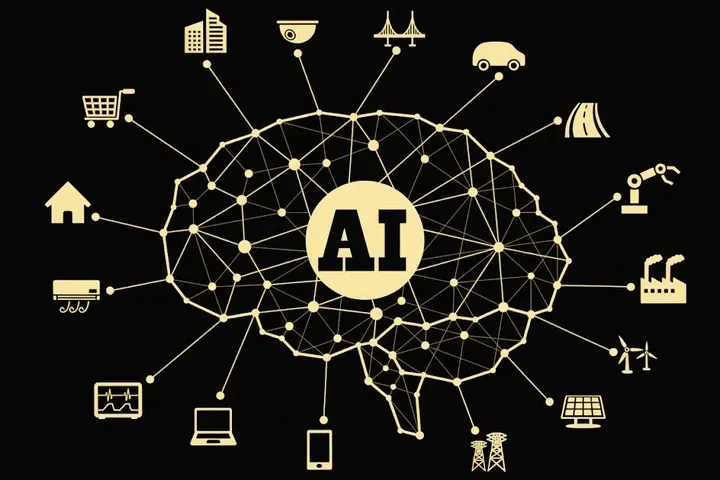
It means an AI assistant can query your live Google Ads account and answer from real data instead of guessing from what you paste in. The bridge is MCP (Model Context Protocol) — the open standard created by Anthropic. GrowthSpree built a free Google Ads MCP server on top of it, so Claude can run Google Ads Query Language (GAQL) queries against your account and return structured answers. For the wider stack, see our complete MCP servers guide for B2B SaaS marketing.
Why a live connection beats dashboards, CSVs, and generic ChatGPT
Three common approaches, and where each breaks down:
| Approach | Limitation |
|---|---|
| The dashboard | Answers one filtered question at a time; you build the view yourself |
| CSV into a chatbot | Stale, partial snapshot — the AI can’t see the rest of the account, so it can’t cross-reference |
| Generic AI, no connection | Surface-level or invented output because it can’t hold your full account data in context |
| Live MCP connection | Reads current data across every dimension, in your account, and answers in seconds |
Key takeaway: The problem with “AI for Google Ads” has never been the AI — it’s the data. A live, read connection removes the ceiling that CSV-paste and generic chat run into.
What you can ask once you’re connected
This is where it earns its place. Questions worth starting with, grouped by job:
Find wasted spend
- “Which campaigns wasted the most budget this week, and why?”
- “Show keywords with spend but zero conversions in the last 30 days.”
Explain performance changes
- “Which campaigns dropped in performance last week versus the prior week?”
- “Why did my cost per lead go up this month — position, CTR, or conversion rate?”
Dig into keywords and search terms
- “Which search terms are irrelevant and should be added as negatives?”
- “Which keywords have the best conversion rate but low impression share?”
Report in seconds
- “Write a client-ready summary of last month’s performance with three next steps.” For a deeper diagnostic, hand the same connection a bigger question — see our Google Ads root cause analysis guide and day-and-time performance analysis.
How to connect Google Ads to AI in 5 minutes
With GrowthSpree’s free Google Ads MCP the whole flow is no-code.
- Sign up on the GrowthSpree Google Ads MCP page (free).
- Open your dashboard from the login link.
- Authorize Google Ads with OAuth.
- (Optional) Connect HubSpot for revenue and pipeline questions.
- Copy your secure token from the dashboard.
- Install Claude Desktop, then download the .MCPB extension file.
- Drag the .MCPB into Claude, paste your token, and toggle the extension ON.
- Open a new chat and start asking about your campaigns. Want the full walkthrough? See How To Get Started With Google Ads MCP Model Context Protocol The Complete Guide, or the Google Ads MCP definitive guide for SaaS.
Does it work with ChatGPT and Gemini?
MCP is an open standard, so it works with any MCP-compatible assistant. Claude has the most mature support today, and ChatGPT and Gemini are adding it (some tools already ship as ChatGPT connectors). The concept is the same regardless of assistant: a live, read connection to your account rather than pasted files. If you prefer Claude, this guide is the fastest path.
Key takeaway: “Chat with your Google Ads data” isn’t Claude-only. MCP is the open standard; the differentiator is a live connection versus copy-paste, not the brand of AI.
Connect revenue data, not just clicks
Google Ads tells you what happened up to the click — not whether those leads became pipeline. Connect your CRM and the same assistant can answer revenue questions. See Google Ads Hubspot MCP Chat With Your Revenue Data, and for the mechanics of feeding CRM outcomes back to Google, our B2B SaaS PPC playbook.
Good to know before you start
- Read + write with confirmation. The AI reads your data and can pause campaigns or adjust budgets/bids — but you approve each change; nothing happens silently.
- Individual and MCC accounts. Works for single accounts and agency (MCC) setups, so you can analyze multiple clients.
- Mind conversion lag. Attribution windows mean very recent conversions may still be arriving — don’t over-react to the last 48 hours.
- It’s your data. Access is via OAuth; treat your token like a password.
Your first week: a simple routine
The connection pays off fastest when you turn questions into a routine. A schedule that works for most teams in week one:
- Day 1 — the waste audit. “Which campaigns and search terms wasted the most money in the last 30 days, and why?” Act on the top three findings.
- Daily — the 2-minute health check. “Any campaigns where yesterday’s CPA ran more than 50% above the 30-day average, or that spent under half their budget?” Same-day anomaly detection replaces the weekly-report lag.
- Friday — the keyword sweep. “Keywords and search terms that spent over $50 this week with zero conversions” — your negative-keyword worklist. Once those feel natural, graduate to the full workflow library in the Google Ads MCP definitive guide — monthly reporting, budget reallocation, and benchmark comparisons.
Common mistakes and tips
- Pasting CSVs anyway. Once connected, ask live — don’t hand the AI a stale export it can’t cross-reference.
- Asking for CPL only. Ask for cost per SQL and pipeline where you can — a cheap lead that never closes is expensive.
- One-off questions. Turn the best prompts into a weekly routine (waste check, performance-change check, report).
- Vague prompts. Specify date range, account, and metric — “last 30 days, this account, cost per conversion by campaign.”
Frequently Asked Questions
Q1. How do I connect Google Ads to AI?
Install a Google Ads MCP server. With GrowthSpree’s free MCP: sign up, authorize Google Ads via OAuth, copy your token, install the .MCPB extension in Claude Desktop, paste the token, and ask questions in plain English — about five minutes, no coding.
Q2. Is it free?
Yes. GrowthSpree’s Google Ads MCP is free to install and use — no hidden charges or premium upgrade to connect your data.
Q3. Is it secure?
Yes. The connection uses Google’s OAuth. Write actions (pausing campaigns, adjusting budgets/bids) require your confirmation, so nothing changes without approval.
Q4. Does it work with MCC (agency) accounts?
Yes. It supports both individual Google Ads accounts and MCC accounts, so agencies can analyze multiple clients.
Q5. Does it work with ChatGPT or only Claude?
MCP is an open standard and works with any MCP-compatible assistant. Claude has the most mature support today; ChatGPT and Gemini are adding it.
Q6. Why is this better than pasting a CSV into ChatGPT?
A CSV is a stale, partial snapshot, so the AI can’t see the rest of your account or cross-reference dimensions. A live MCP connection reads current data across the whole account, which is why the analysis is deeper and more reliable.
Q7. Do I need coding skills?
No. Setup is a sign-up, an OAuth click, and a drag-and-drop extension — no code or API keys.
Q8. What is GAQL and do I need to know it?
Google Ads Query Language is what powers the queries under the hood. You don’t write it — Claude translates your plain-English question into GAQL automatically.
Q9. Can the AI change my campaigns?
It can pause campaigns and adjust budgets or bids, but only with your confirmation. You can also use it purely for analysis.
Q10. Can I connect other platforms too?
Yes. The same account also connects LinkedIn, Meta, GA4, Search Console, and HubSpot — so you can compare channels and connect spend to pipeline in one conversation.
Q11. Is my Google Ads data safe when I connect it to AI?
Yes, with a reputable provider: access is granted via OAuth with read-only scope, your data isn’t used to train AI models, and you can revoke the connection in under a minute. Confirm each provider’s security policy before connecting.
Q12. What’s the single best first question to ask?
“Which campaigns and search terms wasted the most money in the last 30 days, and why?” It surfaces immediate, actionable savings and demonstrates the value of the live connection in your first five minutes.
Get started
Stop exporting spreadsheets. Connect Google Ads to AI for free and ask your first question in plain English.
About the author: Ishan Manchanda is Co-Founder at GrowthSpree, a B2B SaaS marketing agency (Google Partner, HubSpot Solutions Partner, 4.9/5 on G2). GrowthSpree has managed $60M+ in B2B SaaS ad spend across 300+ accounts and built the MCP + QLA infrastructure referenced here.